Gabe Newell’s Surprising Connection to OpenAI: A Look Back
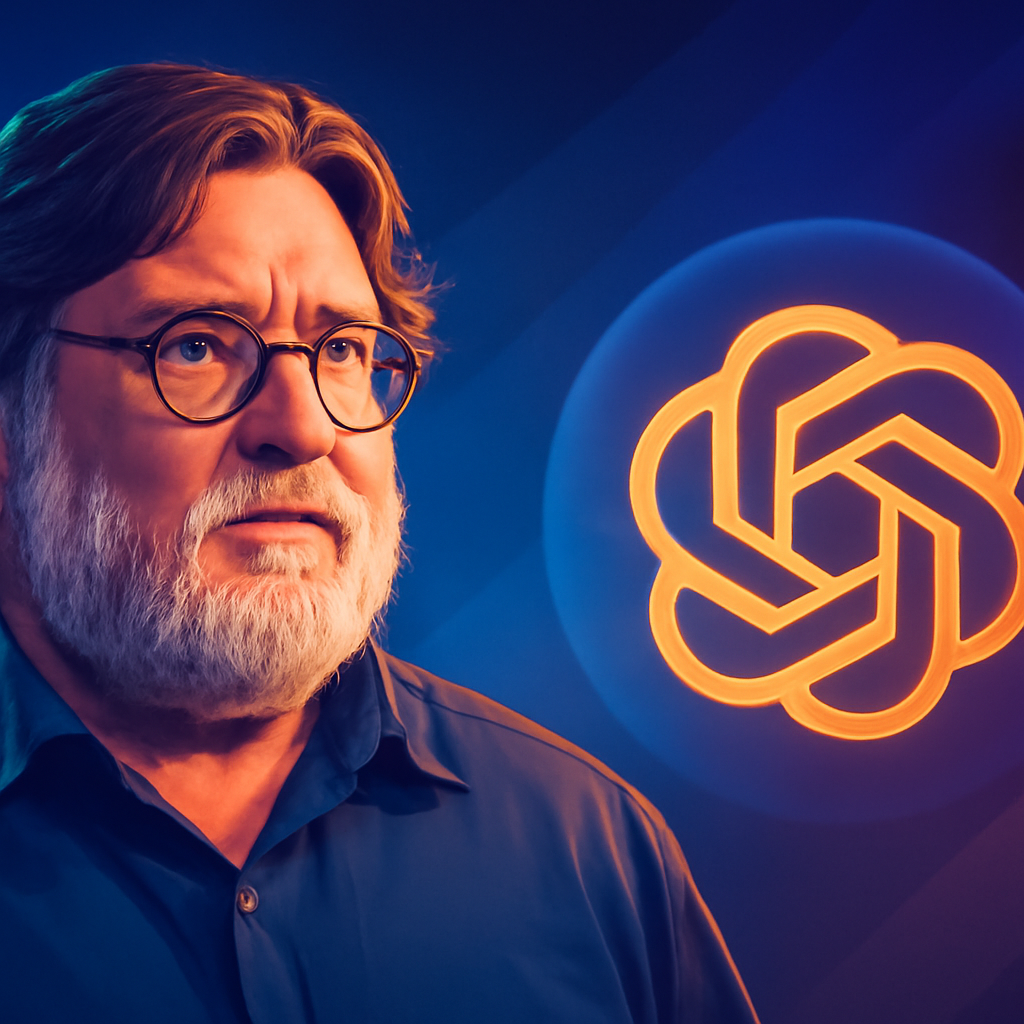
In the midst of the ongoing legal tussle between Elon Musk and Sam Altman, some fascinating internal emails have surfaced that give us a peek into the early days of OpenAI, spanning from 2016 to 2020. While OpenAI has now become a household name, back then it was still finding its footing. One unexpected figure that emerged during this time is Gabe Newell, the founder and CEO of Valve, who not only lent his financial support but also took on an advisory role.
These emails reveal a lot about the dynamics at OpenAI during its nascent years. One notable email came from Shivon Zilis, a venture capitalist who was on OpenAI’s board until 2023 and had a close personal relationship with Musk. This correspondence details how Zilis was balancing her time between OpenAI and her other ventures like Neuralink and Tesla.
In a particularly interesting email dated April 23, 2018, Zilis highlighted some of OpenAI’s advancements, including their efforts to develop an AI capable of beating a five-player team in Dota 2. She noted that the AI’s performance was improving unexpectedly, raising concerns internally about how soon they might achieve Artificial General Intelligence (AGI).
What caught the eye was her mention of an “informal advisory board,” which at the time only included Newell. This was seen as a more flexible alternative to a formal board due to potential conflicts of interest. Newell’s financial backing was substantial, with a report during that period showing his contributions to OpenAI totaling around $20 million. This established a strong connection between him and Musk, further indicating Newell’s commitment to the tech advancements at OpenAI.
Interestingly, Newell’s involvement didn’t stop there. In January 2026, he contributed to a funding round for Merge Labs, a brain-computer interface company that counts OpenAI as an investor. His endeavors in neuroscience, particularly through his company Starfish Neuroscience, align with his ongoing interest in innovative tech, as he explored neuromodulation technologies in his communications.
Newell expressed a shift in his perspective on neuromodulation technologies, indicating he now saw potential consumer markets. He even reached out to Musk to discuss potential collaborations with Neuralink, impressed by their technical advancements, especially regarding implanting electrodes in animal models.
As the Musk v. Altman lawsuit unfolds, more insights into the intricate relationships and ambitions behind the scenes at OpenAI are sure to emerge, along with the tech industry’s constant evolution in AI and neuroscience.