Ghost Recon Wildlands: Still a Chaotic Blast in Bolivia’s Open World!
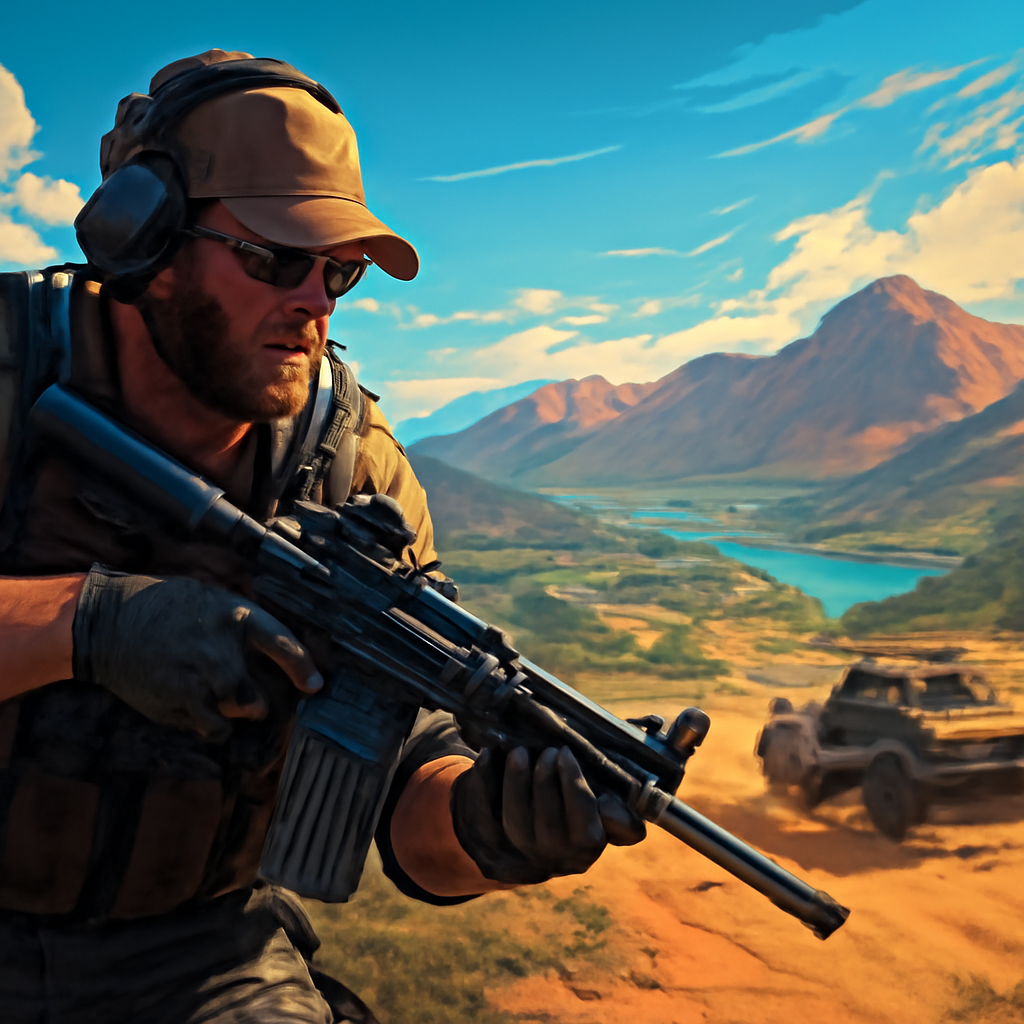
Remember 2017? That’s when Ubisoft dropped Ghost Recon Wildlands on us, an open-world military shooter that promised a massive map and tactical freedom. Fast forward a few years, and many of us, including myself, are still finding ourselves getting lost in its digital rendition of Bolivia. And by lost, I mean utterly sidetracked in the most gloriously chaotic ways imaginable!
Funny thing is, even after sinking dozens of hours into the game, it recently hit me that I hadn’t even properly finished the *first* main mission. Instead, I’ve been busy waging my own personal war against the Santa Blanca cartel, stringing together random side objectives, kidnapping cartel goons, and raiding haciendas – often with hilarious, unintended consequences. Wildlands is a masterclass in how quickly things can go sideways, yaar.
Picture this: I just wanted to commandeer a convoy. Simple, right? Nope. My helicopter gets shot down. No worries, I hijack a minibus, only for it to get wrecked in a road accident. Then, the town I stumble into to interrogate some random guy turns into a full-blown war zone when he pulls a gun. Naturally, I call in rebel reinforcements and a mortar strike – because why not? Amidst the explosions and gunfire, I spot another convoy, grab its leader, interrogate him, and lo and behold, I’ve accidentally completed a main mission I don’t even remember starting! That’s Wildlands for you: a true “deniable op” where chaos is your best friend.
Now, the Ghost Recon series has always been about tactical, squad-based gameplay since its debut in 2001. You’d usually be barking orders, using fancy gadgets, and meticulously planning your moves. Wildlands, however, took a slightly different path. The devs clearly understood the core fun – using your wits and gear to outsmart enemies in hostile territory – and then built a sprawling, open world around it. It’s less about rigid tactics and more about emergent gameplay and dynamic encounters.
The initial missions in Wildlands, the ones I so casually ignored, actually do a fantastic job of throwing you straight into the action. They’re a perfect sandbox to learn the ropes: stealthily approaching targets, rescuing hostages, stealing vehicles, hacking computers, and taking down local kingpins. You’re kitted out with a decent arsenal, night-vision, a drone, binoculars, and the super-handy Sync Shot, which lets your AI squadmates simultaneously take down multiple targets. You’ll be reconning, stealth-killing, going loud, and making dramatic helicopter escapes – all within the first 15 minutes! If you, like me, get tired of endless tutorials and skill trees, Wildlands offers instant gratification.
But let’s be real, while these chaotic diversions are a blast, Wildlands isn’t without its quirks. Over longer play sessions, you might notice that missions can feel a bit repetitive, and the stealth mechanics aren’t exactly cutting-edge. The innovative structure, letting you tackle regional bosses in any order, doesn’t really shake up the overall progression much. Plus, it borrows a few too many pages from the Far Cry and Assassin’s Creed playbooks – think outpost clearing, enemy marking, and a minimap absolutely jam-packed with icons. These tactics can quickly fall into a familiar routine.
Yet, somehow, Wildlands is more than the sum of its parts. Despite seeing all its tricks, many of us just can’t quit it. One brilliant idea that keeps you hooked is extracting “intel” from lieutenants. These seemingly innocuous NPCs drive around until you, perhaps, T-bone their car off a mountain road, pull them from the wreckage, and interrogate them. In return for this “adventure,” they mark a bunch of collectibles on your map – side-missions, weapon cases, or skill points. Grabbing these usually beefs up your character, giving you new weapons or resources to upgrade vital abilities like thermal vision (cool but not essential), enhanced vehicle damage (super handy), or a skill that makes your AI squadmates a little less… embarrassing (absolutely vital!). What’s also cool is that weapon cases aren’t hidden; you know what you’re getting, which means less FOMO (fear of missing out) compared to other games. You’re mostly geared up from the get-go, so the grind is minimal.
Now, for a bit of a serious note: the game leans heavily into that “Tom Clancy” vibe, and it can be a bit much. You play as Nomad, leader of an American special forces team trying to bring about “regime change” in a fictionalized Bolivia. Heard this one before? The story tries to set up an unconvincing revenge arc, framed as a “side-plot in the war on drugs.” Your avatar, Nomad, occasionally spouts some rather bland patriotic lines that might make you roll your eyes. “Sometimes I think about the bad things we do for the good of our country,” Nomad might soliloquize, “I’d do it all again. In a heartbeat.” Yeah, okay, Nomad. We get it.
On the flip side, Wildlands’ version of Bolivia itself is stunning. It’s a beautifully crafted landscape that truly invites exploration, full of atmospheric effects and distinct creature sounds that make you feel immersed. But it’s also a bombastic caricature, more akin to a Just Cause game, which at least has the grace to fictionalize its settings completely. Ubisoft usually handles real-world locations with more tact and historical distance. Here, it’s a bit odd – thugs outnumber regular citizens, who seem strangely unbothered by American soldiers and gruesome cartel displays. Your explosive antics often feel more like a nuisance to locals than a help, making the game’s self-serious tone confusingly cartoonish at times.
Tactically, though, there’s just enough brainpower required to keep things interesting. Stuck at a gate? Parachute in. Anti-aircraft guns bothering you? Blow them up first. Compound alarmed? Shoot the power box. Your surveillance gadgets usually make evading guards easy, but a gunshot or a discovered body will trigger an alert, and that’s when it’s time to embrace the mayhem. Because when Wildlands *forces* you to be stealthy, it often leads to a mission fail.
Take the famous crossover mission with Sam Fisher (yes, *that* Sam Fisher from Splinter Cell). You need to rendezvous with him inside an enemy base between 9 PM and 4 AM, without being spotted or killing anyone. My first try? Foiled trying to crawl under a trailer. Second attempt? My squadmate literally walks into a speeding train and shouts, “We got a man down!” Third? I apparently leave the mission area (I dispute this!). Fourth? Spotted by a guard before I could grab him. Finally, on my fifth attempt, I find a “prescribed” gap in a fence, meet Sam, and he immediately triggers a massive armed response by hacking a laptop. I hold off the onslaught, make a break for it through the jungle to a hijacked car, only to turn around and see a helicopter launching rockets… not at me, but at poor Sam, who’s still plodding through the base to my escape point. Mission fail, again!
So no, Ghost Recon Wildlands isn’t a meticulous espionage simulator, nor does it have a story that will win any awards for realism or depth. But that’s not why we play it. We play it for those unpredictable, unscripted moments when all your well-laid plans crumble into glorious, unforgettable chaos. And for that, Wildlands still delivers a dhamaka!