Kingston’s A400 SSD Hits a Milestone: 100 Million Units Shipped!
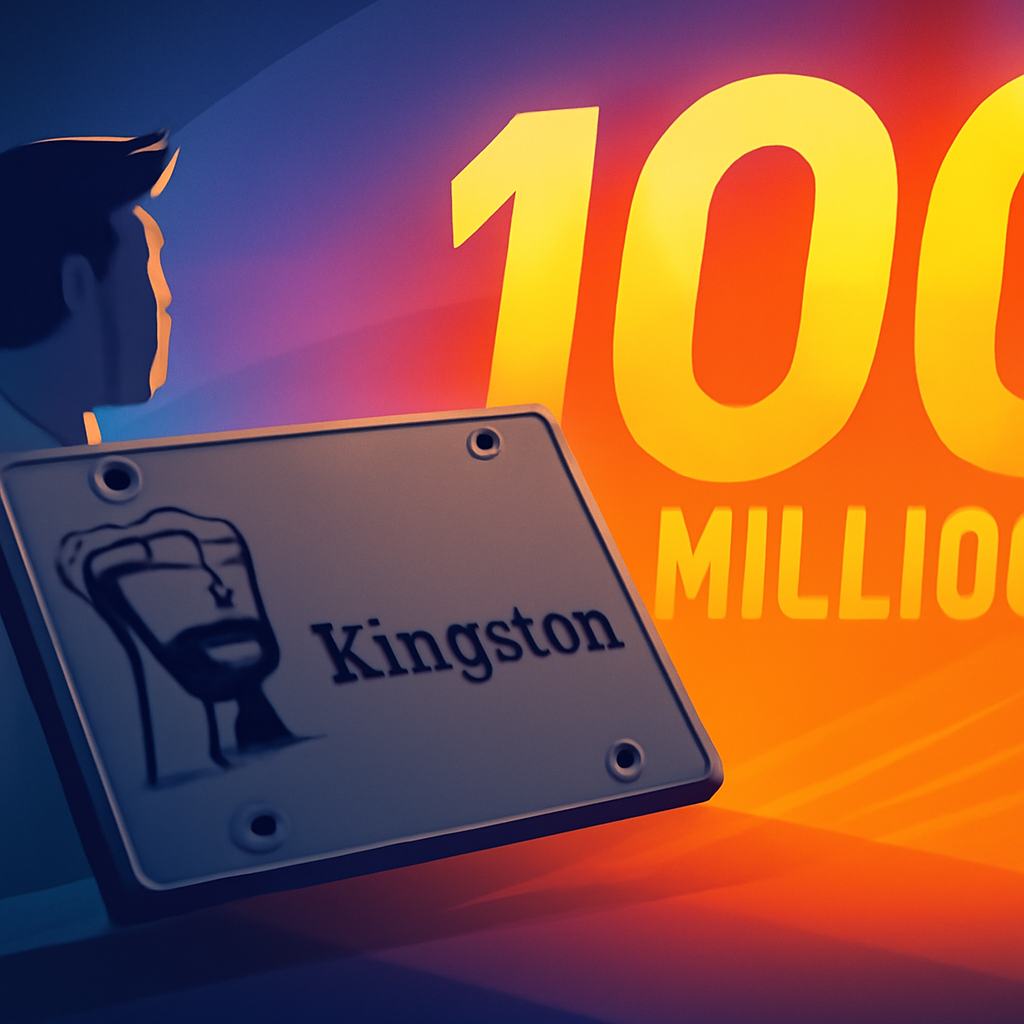
Remember the buzz back in 2008 when the first Intel X25-M SATA SSD hit the scene? It was a game changer for PC storage and set the stage for what we have today. Fast forward to now, and it’s clear that SATA SSDs still have a place in the tech world—especially with Kingston recently announcing that they’ve shipped a whopping 100 million units of their A400 SSD model since its launch in 2017!
The A400 comes in a variety of sizes: 240 GB, 480 GB, and 960 GB, with impressive claimed speeds of 500 MB/s for reading and 450 MB/s for writing. While these numbers might not impress the tech enthusiasts eyeing the latest PCIe Gen 5 drives, there’s still a solid reason to appreciate what SATA SSDs bring to the table.
For many gamers, especially those with older systems, drives like the A400 are a total lifesaver. In fact, some users on Reddit pointed out that they wouldn’t even notice if their high-end M.2 drive was swapped out for an A400. It’s all about performance, and even a standard SATA SSD can significantly boost your system’s responsiveness.
For instance, if we look at game load times using Starfield as an example, an old-school hard drive took a hefty 218 seconds to load the initial level. Switching to a SATA SSD like the A400 slashed that time down to just 19 seconds! And while the latest NVMe drives can still do it faster—down to just under 15 seconds—it’s a solid improvement that enhances the gaming experience without needing the latest tech.
Another point worth mentioning is the PCIe lanes that these newer SSDs use. They can be limited, especially in budget motherboards where you might want to save those lanes for more critical components like your GPU. This means that SATA SSDs, like the A400, remain relevant even as we edge deeper into 2026.
Of course, with rising SSD prices, the A400 might not feel like the sweet deal it once was. But when you consider that the original Intel X25-M cost over $500 for a mere 80 GB, dropping around $190 for a drive with over ten times that capacity doesn’t sound so bad anymore—even if it’s comparable to a decent Gen 4 M.2 SSD.
As an Amazon Associate, PakGamersHub earns from qualifying purchases.