DANGER! Hackers Are Posing as IT on Microsoft Teams to Steal Your Data
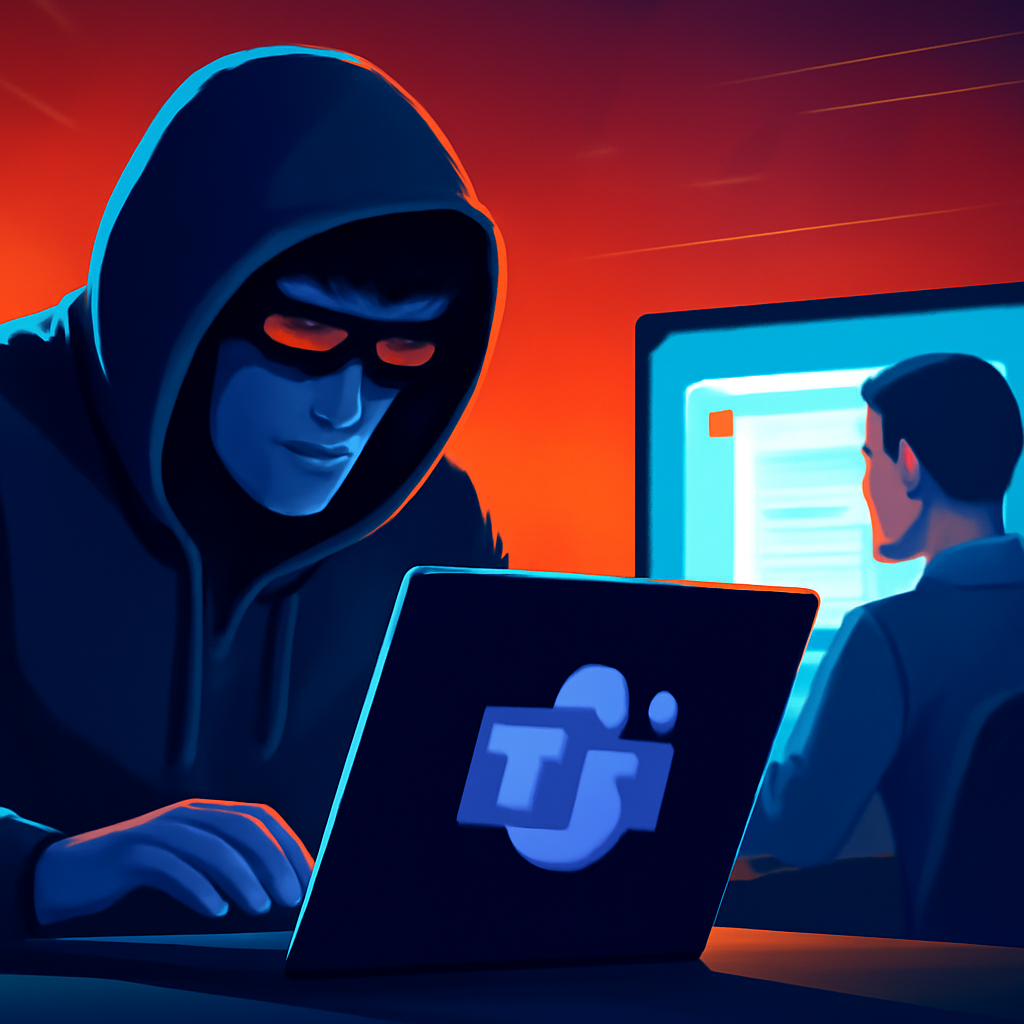
Heads up, PakGamers! While we’re usually talking about the latest game releases or strategies, today we need to shift gears for a critical tech alert. There’s a seriously clever and dangerous hacking scheme making rounds that you absolutely need to know about, especially if you use Microsoft Teams for work, studies, or even casual chats.
Picture this: You get a message on Microsoft Teams, seemingly from your IT support. Sounds normal, right? Well, think again. These aren’t your friendly neighbourhood tech gurus. This is a new, highly sophisticated scam where cybercriminals are hijacking existing Teams accounts – or even creating new ones that look legitimate – to impersonate your IT department. Their goal? To trick you into installing some nasty malware.
The scam is designed to feel incredibly real. Once they’ve got your attention, they’ll encourage you to move to a “bespoke chat client” – basically, a custom chat window that screams legitimacy. From there, they’ll push you to run a seemingly harmless command via PowerShell, claiming it’s a “diagnostic tool” to fix some imaginary issue. But here’s the kicker: that command secretly unpacks a hidden WinPython environment, which is actually the first step to infecting your PC with something called ModeloRAT malware.
This ModeloRAT isn’t your average, noisy virus. It’s built for stealth. Once it’s in, it goes to work without any obvious signs, quietly doing two main things: secretly searching for and stealing your valuable data, and establishing a backdoor connection to another device. What makes it even more frustrating is how it stays put. It uses not just the usual “run-key” method but also a cleverly disguised scheduled task with a random name, making it super tough to get rid of completely if you only find one piece.
This malware is specifically designed to embed itself deep within corporate networks, giving hackers free rein over harvested data. And here’s the scary part: when experts tested ModeloRAT, it managed to slip past several major endpoint detection and response (EDR) products, and even bypassed many antivirus scans on VirusTotal during its analysis. That’s how sneaky it is!
This isn’t an isolated incident either. These kinds of “social engineering” scams, where hackers manipulate people into giving up information or installing malware, are becoming increasingly common and sophisticated. We’ve seen everything from fake job interviews leading to password-stealing Trojans to hackers using deepfake AI to impersonate CEOs and push bogus “troubleshooting programs” that are actually viruses.
So, what’s the takeaway? Simple: be vigilant! If anyone, especially “IT support” (even if they seem to be from your own organization), asks you to download a file, click a suspicious link, or run a command, always, always verify their identity through a separate, trusted channel. A quick call to your actual IT department can save you a world of trouble. Stay safe out there, gamers!