
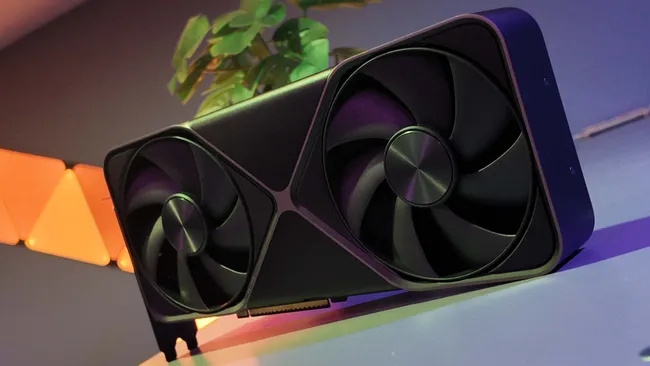
If you were hoping 2026 would bring relief to the battered GPU market, recent reports suggest you might want to temper those expectations. According to a report from The Information, Nvidia is not expected to release any new RTX graphics cards for gamers in 2026, with its next major generation—the RTX 60-series—also facing significant delays.
Sources cited in the report claim Nvidia’s upcoming RTX 60-series GPUs, once rumored to enter mass production by late 2027, have now been pushed back even further. If accurate, that would place the earliest realistic release window somewhere in 2028, extending what already feels like an unusually long wait between GPU generations.
The Real Bottleneck: Memory, Not Silicon
The reason behind these delays is becoming increasingly familiar: a global memory shortage. DRAM and VRAM modules are being aggressively absorbed by the AI server market, leaving far less supply available for consumer graphics cards. As AI infrastructure continues to dominate semiconductor priorities, gaming GPUs are being pushed further down the production queue.
This memory crunch has already had visible consequences. Reports late last year suggested Nvidia planned to cut gaming GPU production by as much as 40% in 2026, and one source cited by The Information has now confirmed that current-generation GPU output is already being reduced. Limited manufacturing capacity at TSMC only compounds the issue, as Nvidia can earn far more per wafer producing AI accelerators than consumer gaming hardware.
Why a 50-Series “Super” Refresh Looks Unlikely
For a while, some hope remained that Nvidia might soften the blow with a Super refresh of its RTX 50-series cards. Rumors pointed to VRAM-heavy variants such as an 18 GB RTX 5070 Super or even a 24 GB RTX 5080 using GDDR7 modules. But in today’s memory-starved environment, such designs make little economic sense.
The RTX 50-series cards already on the market are strong overclockers, leaving limited room for meaningful clock-speed upgrades. Meanwhile, adding more VRAM would only drive prices higher in a market where GPUs are already commanding eye-watering sums. With demand constrained and costs rising, Nvidia appears to have little incentive to push out premium refresh models that few gamers could afford.
RTX 60-Series: A Long Wait Ahead
The rumored delay of the RTX 60-series to post-2027 may be disappointing, but it’s hardly surprising. Nvidia’s roadmap suggests its post-Rubin architecture, codenamed Feynman, is expected to debut first in AI-focused GPUs. Gaming hardware, once again, looks set to wait its turn.
Analysts predict that 2026 and much of 2027 could be a write-off for affordable, abundant DRAM. While major memory manufacturers like SK Hynix, Samsung, and Micron are investing in new fabrication plants, those facilities won’t come online fast enough to ease short-term pressure—and even then, AI demand may continue to dominate supply.
What This Means for PC Gamers
For gamers, the outlook is grim. Those with reasonably powerful modern GPUs may be best off holding onto their current cards rather than upgrading in an inflated market with shrinking supply. Nvidia’s RTX 50-series is likely to remain expensive and constrained, especially if production cuts deepen.
AMD isn’t immune either. Its RX 9070, RX 9070 XT, and RX 9060 XT cards are also facing pricing pressure, and chatter around next-generation RDNA5 or UDNA GPUs has gone suspiciously quiet. Intel remains a wildcard, but even its Arc lineup operates under the same industry-wide memory limitations.
A Tough Era for PC Hardware
All signs point to a prolonged rough patch for PC gaming hardware. Between AI-driven demand, constrained manufacturing capacity, and soaring memory costs, the GPU market shows little sign of stabilizing anytime soon. If these reports prove accurate, Nvidia may be betting on a recovery around 2028, when memory supply is expected to normalize—assuming AI demand doesn’t grow even faster.
Leave a Reply