
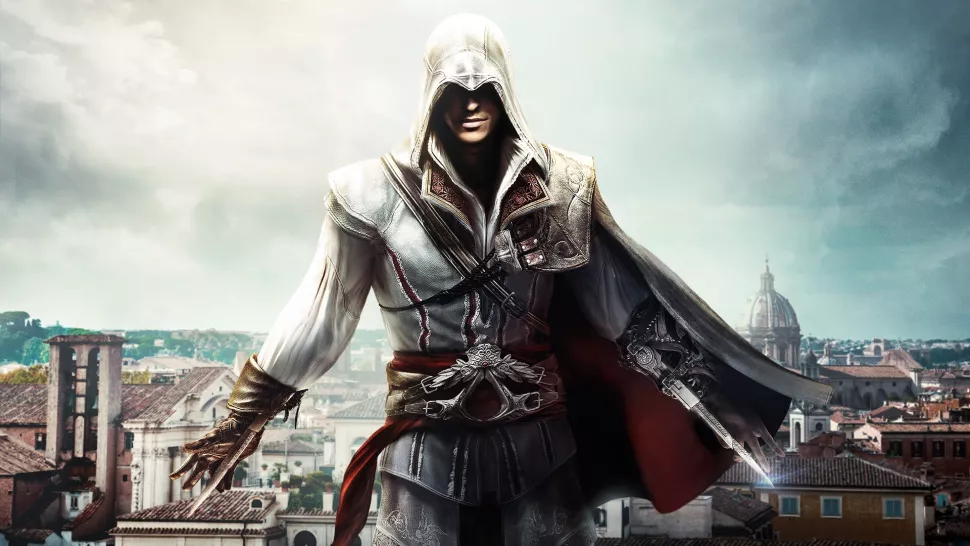
For years, Ubisoft was a powerhouse of blockbuster franchises. From annual Assassin’s Creed launches to genre-defining open-world adventures, the publisher seemed unstoppable. But according to former creative director Alex Hutchinson, the company’s recent decline didn’t happen overnight. It was the result of multiple small shifts that slowly weakened one of gaming’s biggest brands.
Hutchinson, who directed Assassin’s Creed III and Far Cry 4, left Ubisoft in 2017. Looking back, he believes the publisher’s growing fear of new ideas played a major role in its downward trajectory.
A String of Setbacks
Ubisoft’s recent years have been turbulent. Expensive projects like Skull and Bones struggled after long, costly development cycles reportedly nearing $200 million. Internally, the company has faced layoffs, studio closures, and controversial return-to-office mandates. Meanwhile, Tencent increased its stake in Ubisoft’s business operations, gaining significant influence in newly structured divisions.
The cracks have been visible not just in finances but in output. Between 2007 and 2013, Ubisoft released multiple mainline Assassin’s Creed titles in rapid succession, culminating in fan favorites like Assassin’s Creed IV: Black Flag. By contrast, the past six years have delivered far fewer entries, including Assassin’s Creed Valhalla, Assassin’s Creed Mirage, and Assassin’s Creed Shadows.
While fewer sequels could signal a focus on quality over quantity, Hutchinson argues that innovation hasn’t filled the gap.
“Allergic” to New Ideas
According to Hutchinson, Ubisoft once balanced sequels with fresh intellectual properties. Over time, however, the company grew increasingly cautious.
“They became very allergic to new projects,” he explained, noting that several original concepts were shelved. One of them was Pioneer, a science-fiction exploration game that emphasized discovery over combat. It was even teased inside Watch Dogs 2, but never officially launched.
Originally envisioned as a peaceful space exploration experience, Pioneer reportedly shifted direction under new leadership, evolving into something closer to a co-op shooter. Years later, the project remains absent from Ubisoft’s lineup, effectively erased from public view.
For Hutchinson, Pioneer’s cancellation marked a turning point. It convinced him to leave and form his own studio, Typhoon Studios.
The Talent Drain Problem
Hutchinson describes Ubisoft’s challenges as “death by a thousand cuts.” One major issue was talent migration. During a surge in private equity investment across the industry, experienced developers departed to start independent studios. Hutchinson was among them.
As senior creatives left, Ubisoft’s massive team structures became harder to manage. Teams of 800 or more developers were difficult to coordinate even before the pandemic. Remote work only amplified those challenges, making mentorship and collaboration harder for junior developers.
The publisher’s scale, once its strength, became a burden.
The Stadia Detour
After leaving Ubisoft, Hutchinson co-founded Typhoon Studios, which released Journey to the Savage Planet in 2020. The studio had been acquired by Google’s Stadia division in 2019, but when Stadia shut down, Typhoon became collateral damage.
Still, the team regrouped under a new banner, eventually releasing Revenge of the Savage Planet—a testament to creative resilience outside Ubisoft’s structure.
Structural Challenges and Digital Growing Pains
Hutchinson also points to Ubisoft’s struggle to fully adapt to digital distribution. Platforms like Ubisoft Connect (formerly Uplay) never managed to rival Steam’s dominance, and many Ubisoft titles ultimately returned to Valve’s storefront to regain visibility.
At the same time, ongoing restructuring efforts have led to further layoffs, including recent cuts at Ubisoft Toronto. While management claims these changes aim to restore creative autonomy through smaller internal divisions, public perception remains strained.
Can Ubisoft Recover?
Ubisoft is still producing major franchises and confirms new Assassin’s Creed and Far Cry titles are in development. But rebuilding trust—both internally and with players—takes time.
If Hutchinson’s assessment holds true, Ubisoft’s biggest obstacle isn’t competition. It’s rediscovering the willingness to take creative risks. The company once thrived on bold ideas and rapid iteration. Reclaiming that spirit may determine whether its future is defined by cautious sequels—or meaningful reinvention.
For now, Ubisoft’s story serves as a cautionary tale for large publishers: scale and safety can fuel growth, but innovation keeps it alive.
Leave a Reply