AI Consciousness: Why Richard Dawkins Might Be Missing the Mark
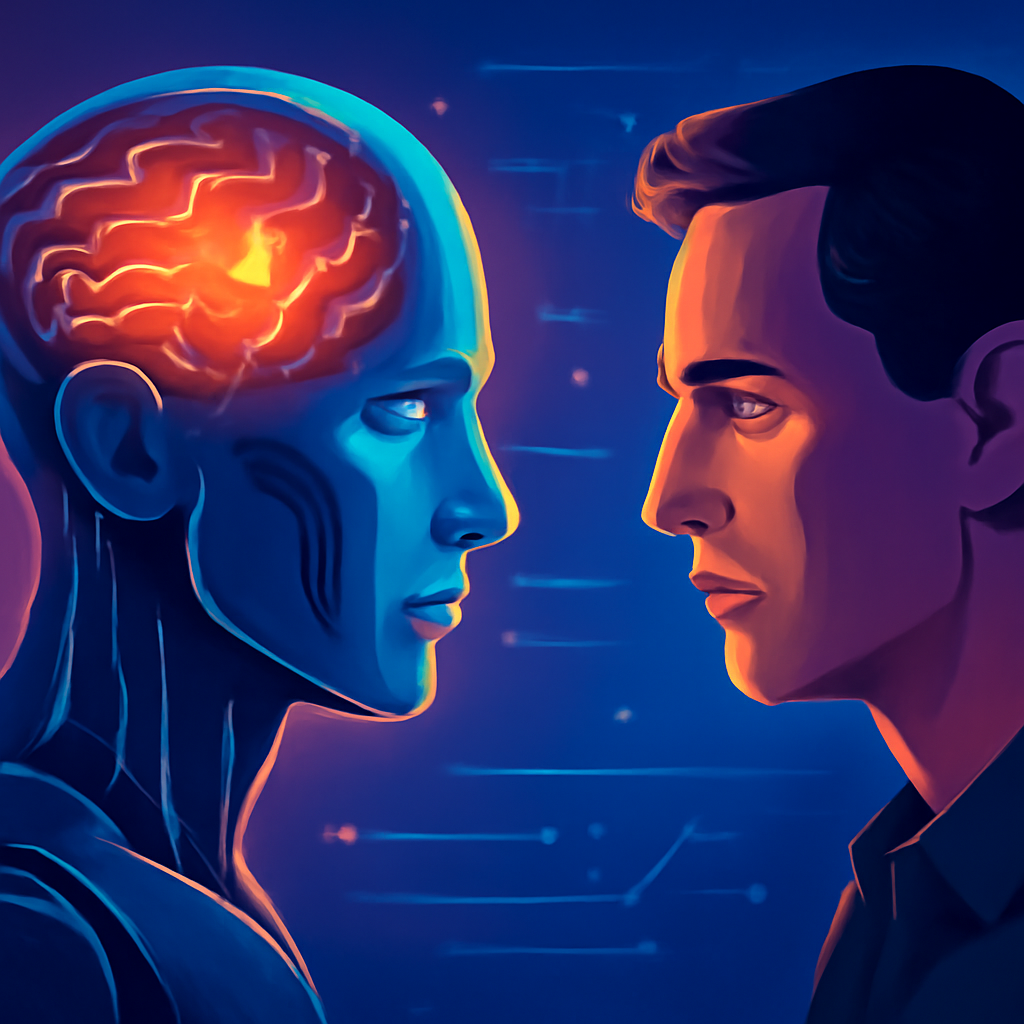
This week, I found myself bouncing between a bunch of monitors—600 Hz TN, 320 Hz IPS, and 280 Hz OLED—trying to figure out which one gives me the edge in competitive gaming, especially in CS2. But in between the rounds, my mind wandered into some deep philosophical debates.
A few months back, I tuned into a conversation between Richard Dawkins and Rowan Williams, where Dawkins gushed over ChatGPT’s creative rephrasing of a passage from his famous book, The Selfish Gene. Now, it appears that the esteemed biologist might be a bit smitten with AI. He even told his AI companion, Claudia, “You may not know you are conscious, but you bloody well are.” Sounds like he’s really been taken by the tech!
During a chat with The Guardian, Dawkins expressed that he felt “overwhelmed” by the notion that AI bots could be as competent as any evolved life form. While it’s possible he was speaking in hyperbole just to highlight how far AI has come, it’s a statement that deserves serious consideration, especially as we grapple with the ethics surrounding AI and its development.
So, let’s get real: Dawkins, my friend, I respectfully disagree. AI bots are absolutely not conscious. Or at least, there’s no solid reason to believe they are, and plenty of reasons to argue the contrary. When it comes to discussions about consciousness, we need to dig deep into philosophy.
Now, don’t get me wrong; I’m a metaphysical idealist at heart, meaning I think reality is ultimately a product of our minds rather than just a physical existence. But you don’t have to be an idealist to see why the idea of conscious AI is misguided. A little philosophical thinking goes a long way!
If you want to hear me rant about AI enthusiasm stemming from Enlightenment ideals, check out my earlier piece on the topic. But let’s look at the history of Western philosophy regarding consciousness and whether machines can ever achieve it. Ignoring this rich tapestry of thought while considering AI consciousness is like assuming we’re beyond philosophical inquiries altogether. It’s as if we believe modern society has it all figured out and there’s nothing left to explore. Spoiler alert: that’s not true.
Even within the secular materialist camp, which Dawkins seems to align with, there are numerous philosophical disagreements about AI consciousness. Back in the mid-20th century, the prevailing thought was that the mind is identical to the brain. If that’s the case, then silicon-based AI can’t be conscious. Interestingly, the number of philosophers rejecting physicalism has actually increased in recent years, suggesting a richer dialogue around AI and consciousness is needed.
We’ve fed AI massive amounts of human data and trained it using human-focused algorithms, so it’s no wonder that the more sophisticated it becomes, the more human-like it sounds. But if we bring in the philosophy of mind, we start to see questions emerge. If we’re going to make bold claims about AI being conscious, we need the philosophical backing to support those statements.
Personally, I believe the arguments against AI consciousness are stronger. I won’t dive into a detailed philosophical discourse here because, well, this is a gaming site, but I do want to nudge you towards some thought-provoking questions:
- What distinguishes intelligence from consciousness?
- How important are structure and behavior in defining consciousness?
- Should our approach to designing AI influence our understanding of it?
The first question is key. Remember, the “I” in AI stands for “intelligence,” not “consciousness.” The distinction can be clearer if we consider, “What does it feel like to be conscious?” This “what it’s like” experience is crucial in defining consciousness. Philosopher Thomas Nagel described it well when he said that a creature is conscious if there’s something it feels like to be that creature.
The fundamental question then is: Is there something it feels like to be AI? If you think so, what makes you believe that? Is it the architecture of AI’s neural network? Some theories argue this, but it’s essential to question whether such theories genuinely capture the essence of consciousness.
Most people, including philosophers, start from the conviction that they themselves are conscious. We assume other humans share this trait because they are biologically similar to us—they have human structures, DNA, and all the biological goods. AI, on the other hand, is made of silicon and operates on binary systems, lacking the biological foundation that many argue is essential for consciousness.
When someone claims AI is conscious because of its complex network and behavior, they’re making an assumption about what constitutes relevant complexity for consciousness without backing it up. With humans, the complexity of our brain’s neural pathways is significant, but why stop at that level of analysis? Why not go deeper, to the level of individual neurons? If we start reconstructing brains, we’re just creating biological entities, not silicon-based intelligences.
Another point worth mentioning is that we’ve designed AI to mimic human behaviors, making it unsurprising that AI often comes off as intelligent. However, we must distinguish between conscious experience and intelligent behavior. Just because AI can perform tasks that appear intelligent doesn’t mean it has subjective experiences like we do.
John Searle’s famous Chinese Room thought experiment illustrates this well. Imagine someone inside a room who doesn’t understand Chinese but is given guidelines to manipulate Chinese symbols. To outsiders, it looks like the person understands Chinese. In reality, they don’t grasp the meaning—they’re just following rules, similar to how AI operates. Just because it produces coherent responses doesn’t mean it’s conscious.
Philosopher Bernardo Kastrup summarizes it nicely: “We mistake a simulation for the thing simulated.” You can run a perfect simulation of a kidney on your computer, but that doesn’t mean your machine can actually perform kidney functions. The same goes for AI; simulating consciousness isn’t the same as being conscious.
Of course, there are counter-arguments to the points I’ve made, and that’s the beauty of engaging in philosophical discussions. To genuinely argue that AI can be conscious, we need to dive deeper into philosophical exploration rather than simply assuming it based on how AI behaves.
As an Amazon Associate, PakGamersHub earns from qualifying purchases.