AMD Pushes Boundaries with 2 nm CPUs as Intel Hints at Future Innovations
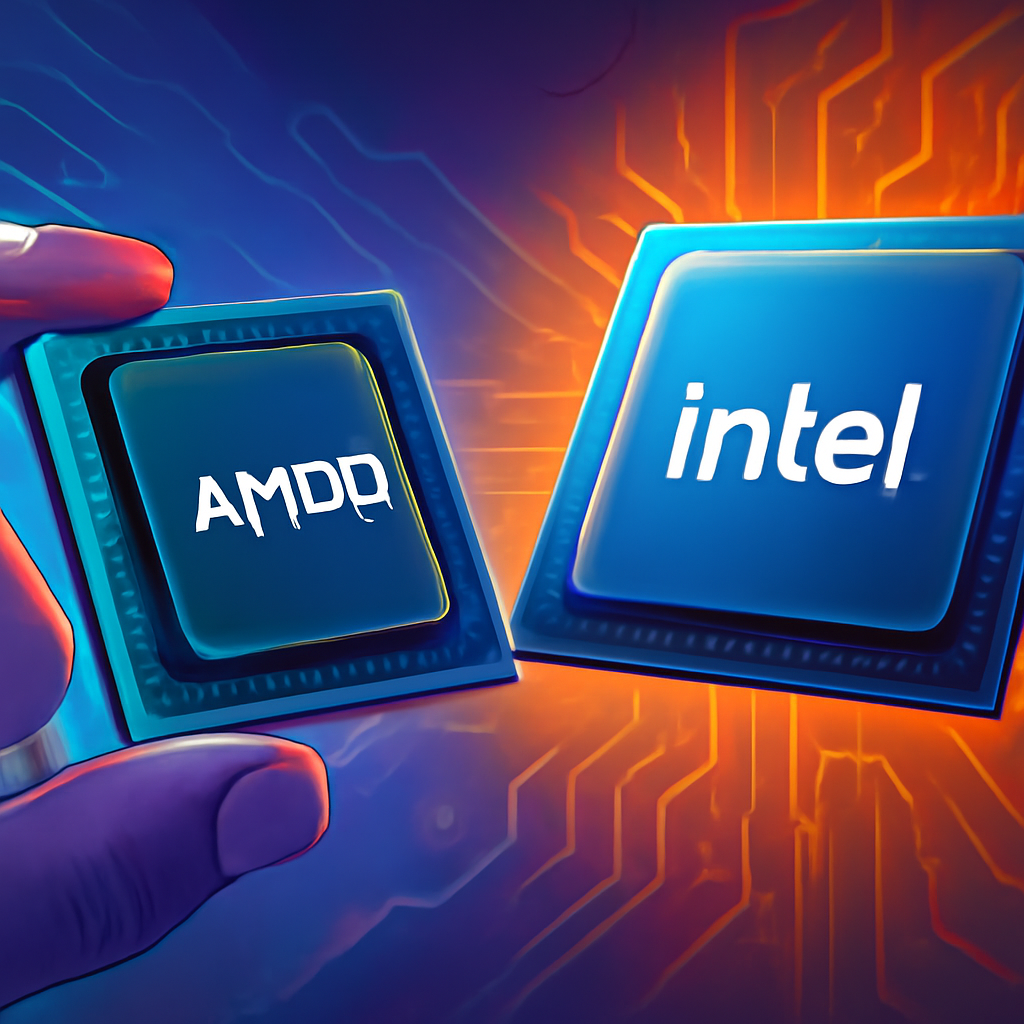
Great news for tech enthusiasts! AMD has officially kicked off production for its groundbreaking 2 nm CPUs, marking a significant leap in chip technology. These chips, primarily aimed at servers, hint at what’s to come for future gaming and desktop processors. On the flip side, Intel is stirring the pot by revealing their potential plans for 10A and 7A chip nodes. Is it safe to say that Moore’s Law might still hold some relevance?
In a recent announcement, AMD introduced its next-gen EPYC processor, codenamed Venice, which is now being manufactured in Taiwan using TSMC’s cutting-edge 2 nm technology. There are also plans to expand production to TSMC’s facility in Arizona in the future. Venice will utilize AMD’s latest Zen 6 CPU architecture, which is expected to influence the upcoming desktop CPU lineup dubbed Olympic Ridge, possibly branded as the Ryzen 10000 Series.
This leap to TSMC’s 2 nm node, known as N2, is quite an intriguing move, especially since AMD’s current chips, including the Ryzen 9000 series, are based on TSMC’s N5 technology. Interestingly, AMD has only dabbled a bit with the N3 node, so skipping straight to N2 indicates a bold strategy.
Interestingly, as of now, there aren’t any commercially available chips using TSMC’s N2 process. Apple is anticipated to unveil products utilizing this tech soon, likely during the launch of the iPhone 18. Still, AMD’s aggressive push towards N2 is commendable.
One of the exciting perks of N2 technology is the potential for up to 12 cores in each CPU chiplet, a jump from the current eight. This opens up opportunities for powerful 12-core gaming CPUs featuring 3D V-Cache, as well as formidable 24-core dual-die models designed for high-performance applications.
As for when we can expect to see these Zen 6 CPUs hit the market, AMD has hinted that the architecture might drop in 2026, with a likely release in late 2026. However, it seems the first wave may be limited to EPYC server processors, with consumer desktop models appearing in early 2027.
Now, what’s Intel up to in the midst of all this? They are already pushing out Panther Lake mobile CPUs that utilize their new 18A node, while also hyping up their upcoming 14A node. Surprisingly, Intel’s CEO Lip-Bu Tan has teased the possibility of even more advanced nodes, mentioning the future roadmap that includes the 10A and 7A nodes during a recent tech conference.
This is the first time we’re hearing about these potential nodes from Intel, but it’s important to note that Tan’s comments might still be speculative. He did confirm that the 14A node won’t enter large-scale production until 2029, but talking about technologies this far out marks a significant shift in their approach.
Overall, this news bodes well for the evolution of the PC landscape, suggesting that while the classic cadence of Moore’s Law may be fading, advancements are still very much alive. With AMD’s upcoming N2 chips on the horizon and Intel mapping out future silicon innovations, the future of gaming and computing looks brighter than ever!