Dota 2 Bots, Billion-Dollar Bets & Big Tech Drama: Microsoft’s Wild Ride with OpenAI!
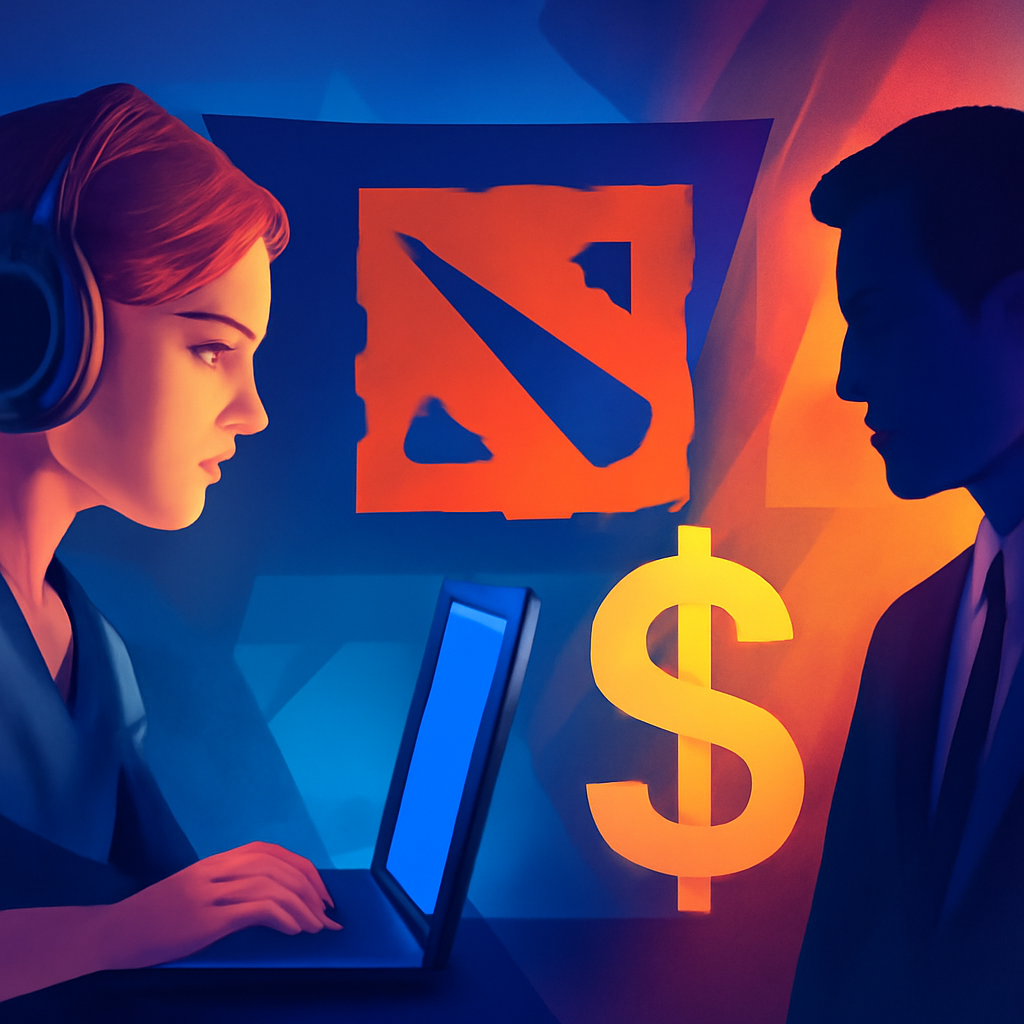
Remember that mind-blowing moment when an OpenAI bot absolutely crushed human players in Dota 2? Well, buckle up, because the backstory behind that epic achievement and the early days of Microsoft’s relationship with OpenAI is far more dramatic and financially intense than anyone knew! Thanks to some freshly unsealed documents from the ongoing legal spat involving Elon Musk and Sam Altman, we’re getting a fascinating peek behind the curtain.
Back in the day, before OpenAI became a household name for ChatGPT, they were busy teaching AI to dominate esports. After their Dota 2 bot made headlines by beating humans, Microsoft CEO Satya Nadella himself sent a congratulatory email to Sam Altman in August 2017. But Altman wasn’t just looking for kudos; he had a much bigger vision – and an even bigger ask.
Soon after, Altman reached out to Nadella with a proposal for a massive partnership: training AI for 5v5 Dota 2 matches. He estimated this would require a whopping $300 million worth of Azure cloud computing resources at list prices. “We could figure out how to fund some of it but not that much,” Altman wrote, essentially asking Microsoft to foot a huge chunk of the bill. He even pitched it as “the most impressive thing yet in the history of AI.”
Now, this wasn’t the first time Microsoft had given OpenAI a sweetheart deal. Internal emails reveal that Microsoft execs were already wary. In a previous agreement from 2016, OpenAI had secured Azure services worth $60 million for a mere $10 million! That’s an insane discount – from $1.15 per GPU hour down to just $0.24. Microsoft was already taking a projected $15 million loss on that deal, and OpenAI was burning through the credits twice as fast as expected. So, when Altman came asking for a potential $300 million commitment, you can imagine the alarm bells ringing in Redmond.
Microsoft execs weren’t just sweating the numbers; they had philosophical concerns too. Some worried about the PR optics of supporting “machines beating humans.” Jason Zander, a Microsoft executive, pointed out that their marketing guidance was against promoting AI that “crushes humans.” However, he also acknowledged the “pop” from personalities like Sam Altman and Elon Musk could be great for Azure’s momentum. Still, he wasn’t willing to “take a complete bath” financially.
The cost analysis for Altman’s new proposal came back grim: it would cost Microsoft an additional ~$150 million! Naturally, it was a “non-starter.” When Altman heard the news, he quickly pivoted, suggesting an alternative: a partnership with Xbox around gaming. He hoped to accelerate the adoption of Reinforcement Learning in Microsoft’s gaming platform, offering to share OpenAI’s tech and IP in exchange for more Dota research sponsorship. The Xbox team was interested, but not enough to cover the extra $35-50 million in Azure credits OpenAI was demanding.
The internal debate at Microsoft was intense. While Nadella felt OpenAI was “at the verge of some big AGI breakthroughs,” other execs like Kevin Scott were “highly skeptical.” Scott famously said OpenAI was treating Microsoft “like a bucket of undifferentiated GPUs, which isn’t interesting for us at all.” The biggest fear? OpenAI ditching Azure for AWS, bad-mouthing Microsoft on the way, and then making a groundbreaking discovery that would benefit a competitor.
Eric Horvitz, another exec, even suggested Microsoft should try to “angle some of their work (even in Dota) toward our interest in human-AI collaborations, centering on extending human intellect with AI—versus beating human.” He felt Elon Musk’s interest in demonstrating AI’s power to “crush humans” was behind OpenAI’s Dota 2 pursuits. It seems Microsoft, at least initially, was leaning towards a more collaborative, less confrontational vision for AI.
Fast forward a few years, and we know how this story unfolds. Despite all the early skepticism and financial headaches, Microsoft eventually went all-in. They invested $1 billion in OpenAI in 2019, followed by another $10 billion in January 2023, ultimately taking a significant stake in the company. It’s a testament to how much things can change in the fast-paced world of tech, even when the initial outlook seems dire. Who knew a Dota 2 bot could spark such a fascinating, high-stakes drama?
As an Amazon Associate, PakGamersHub earns from qualifying purchases.