Embracing the Challenge: My Journey into Warhammer 40,000
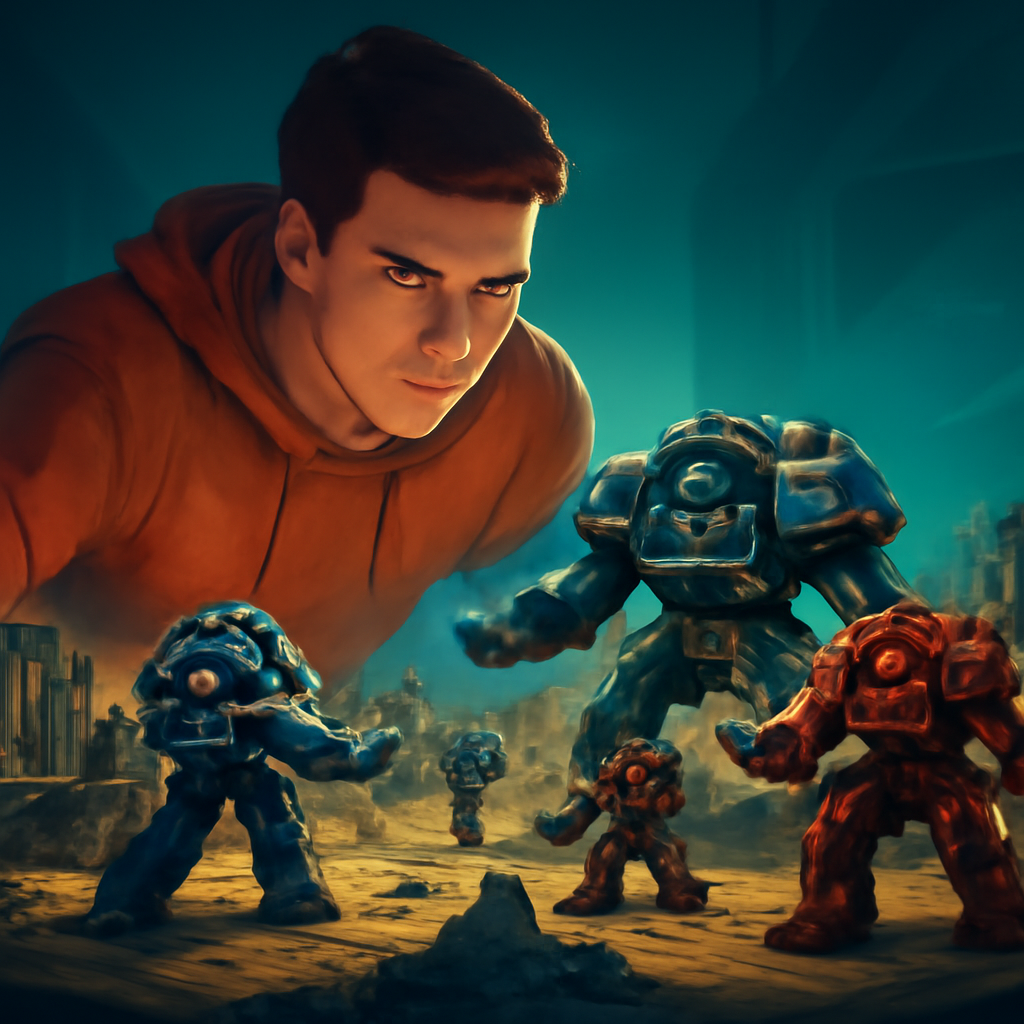
In the grimdark universe of Warhammer 40,000, it’s all about war. Everything is drenched in chaos, whether it’s humans battling other humans, facing off against alien species, or taking on the sinister forces of Chaos. It’s a universe where violence reigns supreme, and after much deliberation, I decided to dive headfirst into this chaotic world by building my own army of Grey Knights with the launch of the 11th edition of the tabletop game.
My introduction to the expansive Warhammer universe kicked off back in 2016 when I played Creative Assembly’s Total War: Warhammer. It was an enticing entry point because it not only quenched my thirst for rich fantasy lore but also featured turn-based strategy mechanics, auto-battles, and the ability to pause to strategize during fights—making it accessible for players like me. Fast forward to now, I’ve clocked nearly 1,700 hours in the Total War: Warhammer series and have enjoyed titles like Fatshark’s Vermintide, Darktide, and the thrilling Warhammer 40,000: Space Marine 2. As I explore the tabletop series, I’m learning all about its accessibility challenges—or the glaring lack thereof.
With years of experience critiquing video game accessibility, I know what players with disabilities need. I understand the features that make gameplay smooth and enjoyable. Thanks to these designs, I can complete extensive campaigns in Total War: Warhammer and tackle the hardest missions in Space Marine 2 without feeling drained. However, when it comes to the tabletop version, I’m reliant on the help of friends due to its inherent challenges.
One of the most surprising hurdles I faced was the inability to roll dice—a fundamental part of this gameplay. Every action, from charging and shooting to casting spells, hinges on dice rolls. The realization that I had lost such a simple form of independence felt humbling. It brought back memories of when I struggled with self-feeding at the age of 14.
But the barriers don’t stop at dice. I can’t even place my units on the battlefield without assistance. And when it comes to constructing or painting my army, I need the help of others. For the first time, I felt completely helpless in a gaming context without my friends or family. Yet, these challenges have made my enjoyment of the game even sweeter as I navigate this experience as a disabled player.
Now, before anyone judges my decision to engage with a game I can’t fully play alone, let me clarify: I don’t harbor any resentment towards Games Workshop, the creators of Warhammer. I was well aware of the challenges before jumping into this venture. Unless they invent automatic dice rollers or self-placing units, the tabletop version is going to be tough for me. In many ways, I’m thankful to Games Workshop for helping me appreciate the intimacy of relying on others, especially with a physical disability. My journey began with a dear friend helping me build my first model, the iconic Grey Knights hero, Castellan Crowe.
This past March, my partner surprised me with Crowe and a box of Terminators as a birthday gift. Soon after, friends pitched in to buy me Grey Knight-themed dice, a Strike Squad box, and even the latest Codex for the Grey Knights. I eventually reached out to a local friend asking if he could help build my first model, and he gladly agreed.
Warhammer 40,000 can be quite an expensive hobby, and for me, the costs are even higher due to what I call the ‘Disability Tax’—the extra expenses that come with living and enjoying entertainment as a disabled person. Typically, Warhammer games are played with armies worth 2,000 points. Depending on the faction, that can quickly add up. For instance, Crowe is only worth 90 points. As you can see, assembling a solid Grey Knight army takes a lot of investment, and I find myself spending more money to get models built that I already bought.
Painting, however, has turned out to be more straightforward and even more special. My partner, Poppy, loves to paint in her free time, whether it’s scenic landscapes or artistic canvases. When I asked about painting my models, she enthusiastically volunteered, under the condition that she could paint one Marine in her own colorful style. I couldn’t say no, and after a few months, she proudly called me from a Warhammer store in the UK to show off her masterpiece, a Space Marine she affectionately named Brother Candy. Her willingness to be part of my new hobby is heartwarming, and Brother Candy, with his striking purple and gold armor, symbolizes our bond.
Recently, Games Workshop announced the release of pre-painted terrain pieces, making it easier for any player—abled or disabled—to jump into the game. This is a huge leap as it’s the first time they’re offering pre-painted models as well. While the pricing and launch date are still under wraps, I’m hopeful they’ll expand this to pre-painted units for those who may struggle to paint themselves.
Until now, I hadn’t realized that my fears about engaging with the tabletop version were deeply rooted in my own concerns about my disability. I always knew the mechanics would be physically demanding. Yet, the camaraderie found in each Space Marine Chapter mirrors the community spirit present in gameplay. Warhammer is about coming together, deepening friendships through battles, and sharing lore. For me, it’s about acceptance—embracing my limitations, finding new connections with different gaming mediums, and learning to accept help from those around me.
As a disabled journalist, I aim to shine a light on accessibility and the experiences of disabled gamers. When I’m not writing, you can find me passionately discussing Pokémon or sharing stories about my cat, Goomba.
As an Amazon Associate, PakGamersHub earns from qualifying purchases.