Guild Wars 1: The MMO That Predicted the Future (But No One Noticed!)
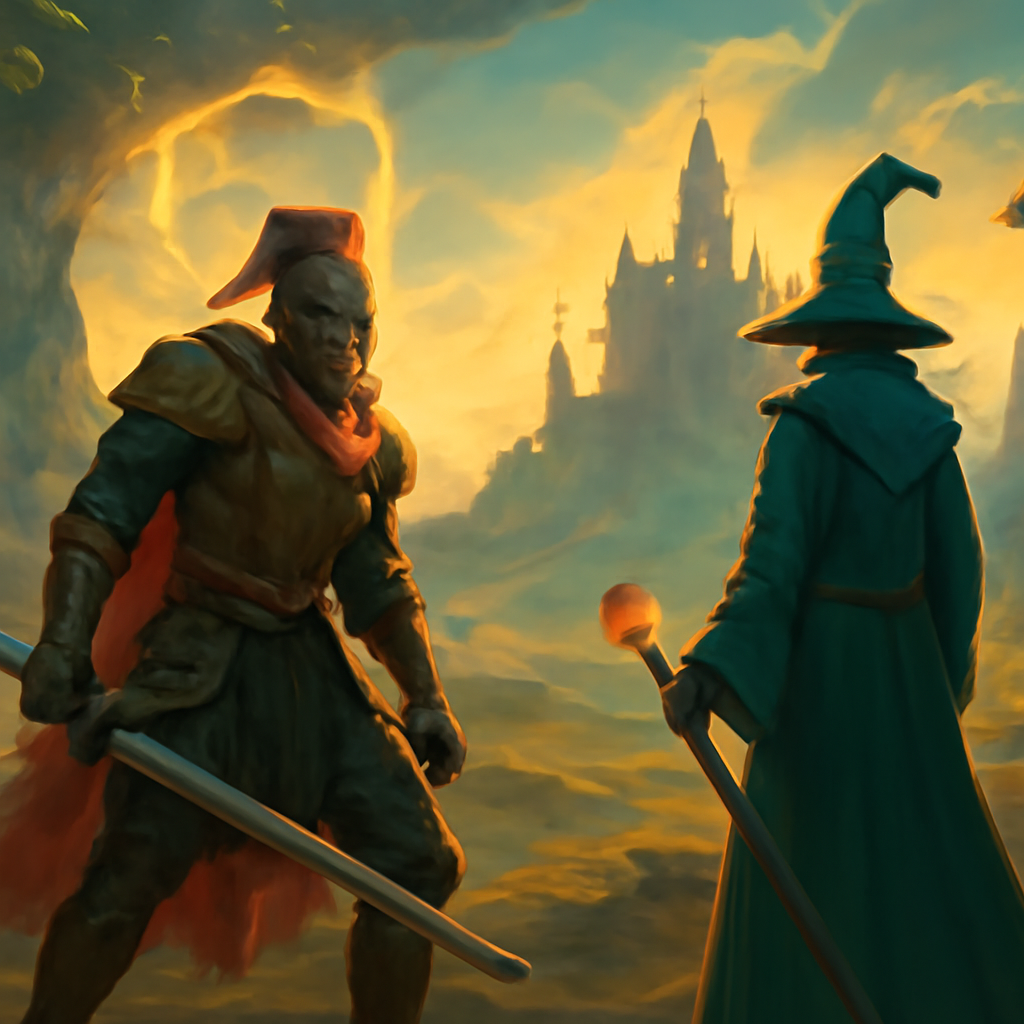
Guild Wars 1: The MMO That Predicted the Future (But No One Noticed!)
Bhaio aur Behno, the gaming world is currently buzzing with exciting news about Guild Wars 3 on the horizon! As part of this big reveal, the developers at ArenaNet took a trip down memory lane last week, sharing some interesting tidbits about their upcoming Massively Multiplayer Online (MMO) game. They’re even aiming to fix some issues that many players, including some of us at PakGamersHub, felt in Guild Wars 2.
But what really caught our eye was a fascinating story about the original Guild Wars game. Turns out, back in the day, ArenaNet tried really hard to avoid calling it an MMORPG. Seriously!
The “CORPG” Experiment: A Tale of Misunderstood Innovation
Picture this: it’s 2005. The MMO scene was dominated by huge, open-world experiences where you constantly saw other players everywhere. But ArenaNet had a different vision for Guild Wars 1. They saw it as a CORPG – a “cooperative online RPG.”
Here’s how they described their game:
“Guild Wars Reforged is, at its core, a game about a small team: a player and their assembled team of henchmen or hero NPCs or other players they want to bring along with them, overcoming challenges in a predominantly instanced game.”
Essentially, you’d mainly see other players in social hubs. Unless you specifically invited them to your party, your adventure was mostly with your chosen team (be it friends or AI companions) through instanced zones. They truly believed this set them apart from the typical MMORPGs of the time.
But guess what? The “CORPG” branding never really stuck. Everyone, from players to critics, just called it an MMORPG. Kya baat hai!
Ahead of Its Time: GW1’s “Unique” Features Now Standard
Here’s where the story gets really interesting, and honestly, a bit ironic. The very things ArenaNet highlighted as making Guild Wars 1 different from other MMOs are now commonplace, even defining features, in many of today’s biggest online games!
- Instanced Content: Many modern MMOs rely heavily on instanced dungeons, raids, and story zones, much like GW1’s core design.
- NPC Companions & Solo Play: Think about games like Final Fantasy XIV, where you can often fill out your party with AI-controlled NPCs for story content, or World of Warcraft, which has increasingly focused on soloable experiences over the years. This focus on personal progression and optional group play was a cornerstone of GW1.
It’s almost like ArenaNet had a crystal ball! They were pushing ideas that the rest of the industry would only fully embrace years, even decades, later.
From Sandbox to “Theme Park”: An Industry Shift
This observation isn’t just ours. Even veterans like Raph Koster, who worked on legendary titles such as Ultima Online and Star Wars Galaxies, have pointed out this industry shift. He noted that the open-world sandbox MMOs that Guild Wars 1 tried to distinguish itself from eventually lost favor. In their place came more instanced, “theme park” style MMOs with strong social hubs – exactly what GW1 was trying to be!
So, when you describe a game where you mostly interact with players only in social areas or by invitation, you’re not just talking about Guild Wars 1 anymore. You’re describing a huge chunk of the modern MMO landscape.
Embracing the Label, Winning the Awards
Eventually, ArenaNet threw in the towel on the “CORPG” angle. They realized players had already made up their minds. As they put it:
“We even won multiple MMO-of-the-year awards! We gave up on the CORPG angle since it didn’t stick with players, and we simply embraced what everyone told us: we’d shipped a unique kind of MMORPG.”
And honestly, that’s the spirit of gaming, right? Sometimes, players see things even before the developers do. Guild Wars 1 might have struggled with its identity crisis early on, but its core design principles proved to be incredibly forward-thinking, making it a truly unique kind of MMORPG that set trends for years to come. What a journey!
As an Amazon Associate, PakGamersHub earns from qualifying purchases.