Nolan’s Odyssey: Unveiling the Mastermind Behind the Myths and the Shocking Athena Twist
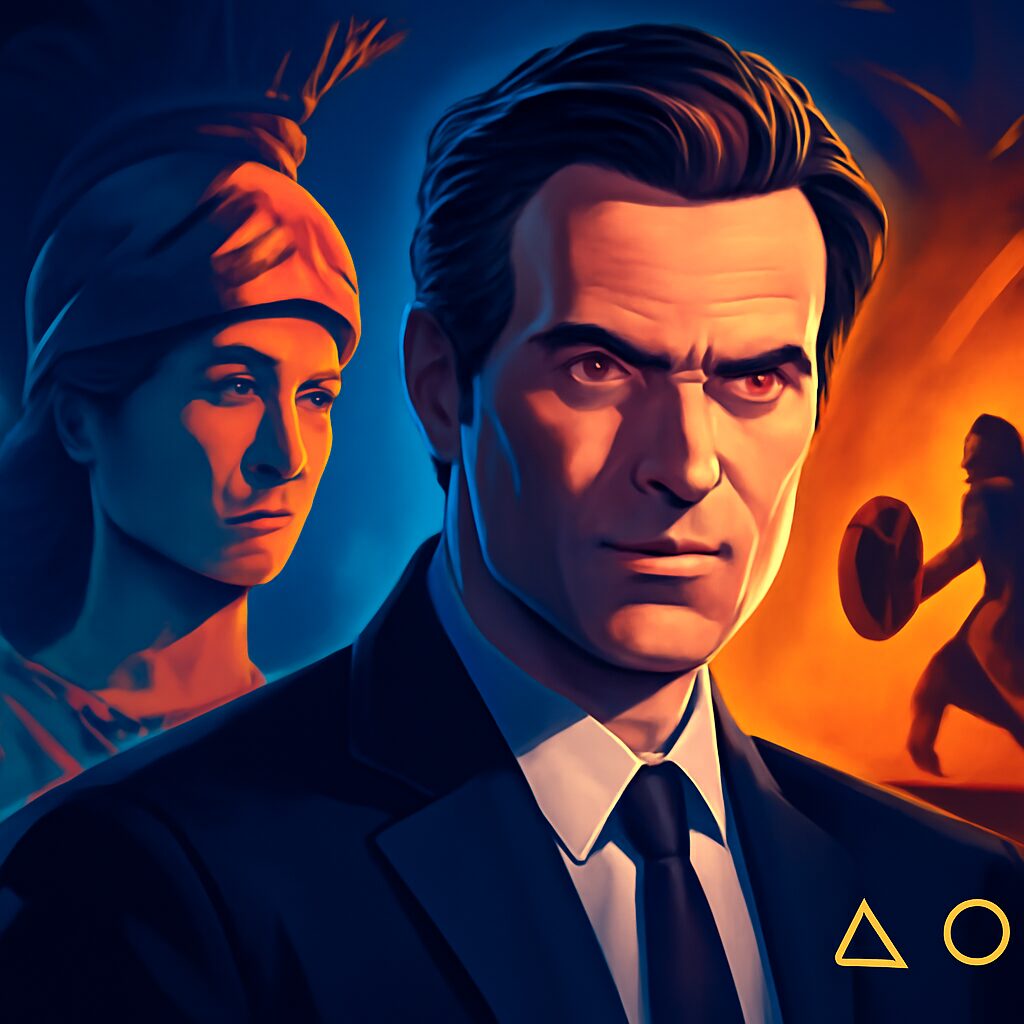
Alright, gamers, let’s talk about Christopher Nolan. When this visionary director takes on a project, especially one as legendary as Homer’s *The Odyssey*, you know it’s going to be an experience. But his recent film had everyone buzzing even before release, primarily because Nolan promised a “grounded” take on the mythical gods. Many purists raised eyebrows, wondering if stripping away divine intervention would diminish the epic’s core.
Turns out, Nolan’s approach wasn’t just a stylistic choice; it was the master key to unlocking the film’s deepest mysteries. Instead of showing us Zeus, Poseidon, or other Olympians as literal, human-like figures meddling from above, Nolan wanted us to *feel* their presence. He aimed to immerse the audience in the raw power of nature – the terrifying storms, the turbulent seas, the howling winds – making us fear the “wrath of Poseidon” just as the characters on screen did. It’s about experiencing the world through the eyes of people who understood these phenomena as divine will.
Indeed, the film subtly yet powerfully hints at this interpretation. Zendaya’s portrayal of Athena even delivers a line that perfectly encapsulates this idea: “What are the gods if not the waves crashing in?” This isn’t just a clever cinematic trick; it’s fundamental to Nolan’s narrative. His *Odyssey* simply wouldn’t work without this unique perspective on the divine.
While the movie certainly features fantastical elements – giants, monsters, and even transformations – the gods themselves are never presented as literal, omnipotent beings. Take Samantha Morton’s Circe, for example. She’s a formidable sorceress, capable of turning men into pigs, but the film never explicitly labels her a goddess. Her motivations are deeply human: a searing rage against soldiers she believes are rapists and pillagers, and a desire to punish them and expose their true nature. This mirrors the internal struggle of Matt Damon’s Odysseus, who spends his epic journey punishing himself, hiding from his past, and ultimately, confronting his own dark side.
Charlize Theron’s Calypso is another fascinating example. Rather than a true goddess, she comes across as an incredibly beautiful, lonely island dweller who offers Odysseus a way to forget his past sins. Is it selfishness or compassion? Likely a bit of both. After all, who wouldn’t be tempted to keep a companion like Odysseus who washes ashore, especially after years of isolation? In a way, Calypso becomes an enabler, allowing Odysseus to numb himself to his guilt, much like the infamous lotus flowers.
Circe demands harsh sentences, while Calypso offers an escape from guilt. These two impulses are constantly battling within Odysseus’s own mind, giving birth to his personal “Athena.” And this is where Nolan’s genius truly shines: the final reveal about who “Athena” really is. It’s a moment that recontextualizes everything that came before.
In one of the film’s most poignant scenes, as Odysseus finally confesses his crimes to his loyal wife Penelope (Anne Hathaway), “Athena” holds his hand. But in a heart-wrenching flashback, we discover the truth: she was never a goddess. She was a young Trojan woman, brutally beheaded alongside Athena’s statue during the war. Odysseus, unable to face the horror of his actions, projected the image of this murdered woman onto the goddess, creating a coping mechanism for his shattered psyche.
This revelation isn’t just a plot twist; it redefines the very concept of “Zeus’ Law.” It’s not about fearing divine retribution for slighting a potential god in disguise. Instead, it’s about human integrity, compassion, and recognizing the inherent dignity of *every* human being. If kindness is only motivated by fear of offending a god, it loses its value. Nolan understands this, and deep down, so does Odysseus. When he broke this fundamental law with the deception of the Trojan Horse, he didn’t just betray a god; he shattered the core values that made his civilization worth living for.
Odysseus’s decision to embark on his lengthy, perilous journey after the war, defying the advice of other sailors, wasn’t just running away physically. It was his first subconscious act of self-punishment, a judgment he also imposed on the men who followed him. They had all, in their desperation to win at any cost, abandoned principles for greed and revenge. Calypso’s advice to “take his punishment” from Poseidon wasn’t about appeasing a sea god; it was a plea for him to abandon his denial and confront his true self – the barbaric threat from the sea he had become.
When Odysseus finally sees his imagined “Athena” for who she truly was – not a divine guide, but a human victim of his actions – he begins to own his past. He acknowledges how he befouled the very values his kingdom was built upon. Only through a full, heartfelt confession and making amends can he truly return home, emerging as a mature man willing to accept his exile, understanding that even decades of penance can’t undo the catastrophic choices he made. He became a leader worthy of Ithaca, but in doing so, had to leave it.
Had Zendaya’s character truly been the goddess Athena, actively steering his path, it would have robbed Odysseus of his autonomy, his humanity, and the profound depth of his journey towards accountability. It would have diluted a powerful moment of grace, where he can imagine the soul of a human so compassionate that she holds his hand as he recounts his role in her murder. This brilliant twist is precisely what makes Christopher Nolan’s *The Odyssey* such a resonant, urgent, and dramatically satisfying cinematic achievement.
As an Amazon Associate, PakGamersHub earns from qualifying purchases.