The OG Visionary: Miyamoto’s 90s Take on Why Simple Fun Trumps Graphics!
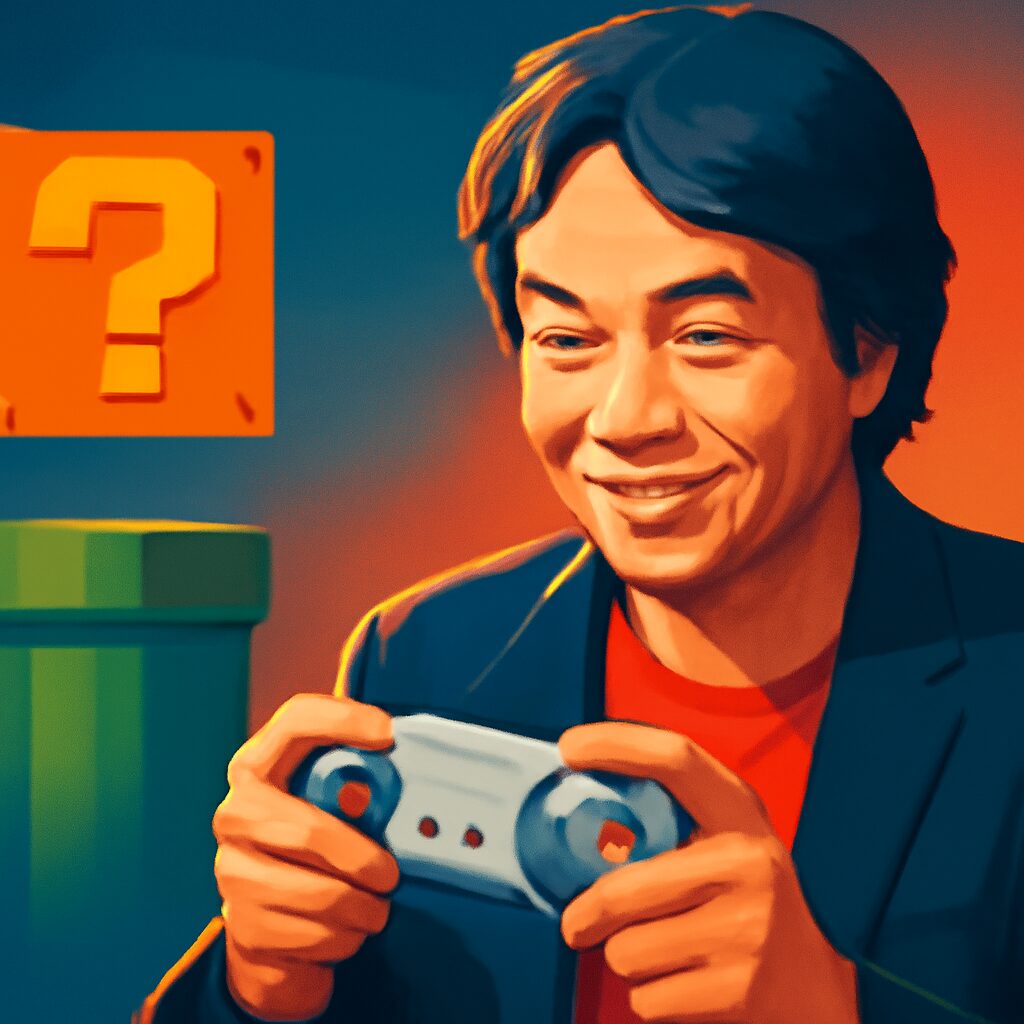
If you’ve ever wondered why Nintendo marches to the beat of its own drum, consistently delivering unique experiences instead of joining the never-ending race for hyper-realistic graphics, you’re not alone. It’s a philosophy that has defined them for decades, especially since the days of the DS and Wii. But what if we told you the seeds of this unique vision were sown much, much earlier – even when games like Super Mario 64 were blowing everyone’s minds with pioneering 3D visuals back in 1996?
Turns out, even back then, the legendary Shigeru Miyamoto, the genius behind Mario and Zelda, was already thinking beyond polygons and cinematic cutscenes. While the gaming world was marveling at the dawn of 3D, Miyamoto’s heart was set on something much simpler: a casual physics sandbox, like launching virtual cannonballs on an old Macintosh.
In a fascinating interview from July 1996, Miyamoto chatted with Kenji Eno, a developer known for his experimental work, including the cult horror game D. Eno had just experienced the newly released Super Mario 64 and, while impressive, he dreamed of even more interactive 3D worlds – imagine Mario’s footsteps realistically kicking up snowballs as he ran! Miyamoto’s response, now freshly translated, sheds light on his thinking.
“I would love to do that,” Miyamoto reportedly said. “However, strategy guides exist now, so the joy of someone discovering something entirely on their own doesn’t really translate anymore. Everyone expects to be able to beat the game as a given. There’s a massive dilemma there.” This frustration with pre-determined solutions and linear exploration is also why, a few years later, while making Ocarina of Time, he felt old-school Zelda dungeons weren’t “really that much fun.”
Miyamoto even admitted that for Mario 64, he initially wanted a smaller scope, perhaps half the number of stars per stage. But he worried the market wouldn’t accept a game that wasn’t packed to the brim with content and technical wizardry. He felt pressured to deliver what gamers expected from a “big” game.
He then brought up an old Mac game: “Do you remember that old Mac game where you’d shoot cannons at each other in a windy area? You’d adjust nothing but the launch angle and power to hit the enemy artillery hiding behind rocks. The other side would shoot back at you using the wind too.” This simple 2D game, likely a title called Cannon Fodder (not the Amiga shoot-’em-up), with its black and white graphics and destructible environment, was his ideal.
“I think that kind of thing is far more interesting than the RPGs we see today,” Miyamoto argued. Imagine that – the creator of Mario and Zelda preferring a simple physics game over the epic, story-driven RPGs that were becoming massive hits! But he also highlighted the core problem: “But you just can’t make a game like that when you have to worry about justifying a 9,800 yen price tag.” He pointed out that people often assume casual games are low-budget, made by rookies, or suitable only for digital distribution services like Japan’s Satellaview.
This division between “big”, expensive physical games and smaller, experimental digital titles was a strong line in the 90s, and Miyamoto found it frustrating. “Everything gets manufactured based entirely on price,” he lamented. “Instead of opening up a playground for people to try out new ideas, everything has just become a conversation about cost. I find that a bit frustrating.”
It’s incredible to see how Miyamoto’s insights from nearly three decades ago still resonate today. While the debate over game prices continues, it’s now much easier for smaller, innovative games with fresh ideas to find their audience through digital storefronts. Who knows, maybe the next big indie hit will indeed be a modern take on two players shooting cannons at each other! Miyamoto’s timeless vision reminds us that sometimes, the simplest ideas offer the most profound fun.
As an Amazon Associate, PakGamersHub earns from qualifying purchases.