Google’s Cosmic AI Test: What’s Brewing in Orbit for Future Tech?
Get ready for some truly out-of-this-world tech news, PakGamersHub fam! While we’re usually busy talking about frame rates, new game releases, and epic esports battles, sometimes a story comes along that’s so futuristic and mind-boggling, we just have to share it. And this one involves Google, artificial intelligence, and a trip to space!
That’s right, the tech giant behind so much of our digital lives is now literally reaching for the stars, not just to admire them, but to put some serious computing power to the ultimate test. It’s a move that sounds straight out of a sci-fi blockbuster, and it could have fascinating implications for the future of technology, even for how we game down here on Earth.
Google’s Bold Leap into Orbit
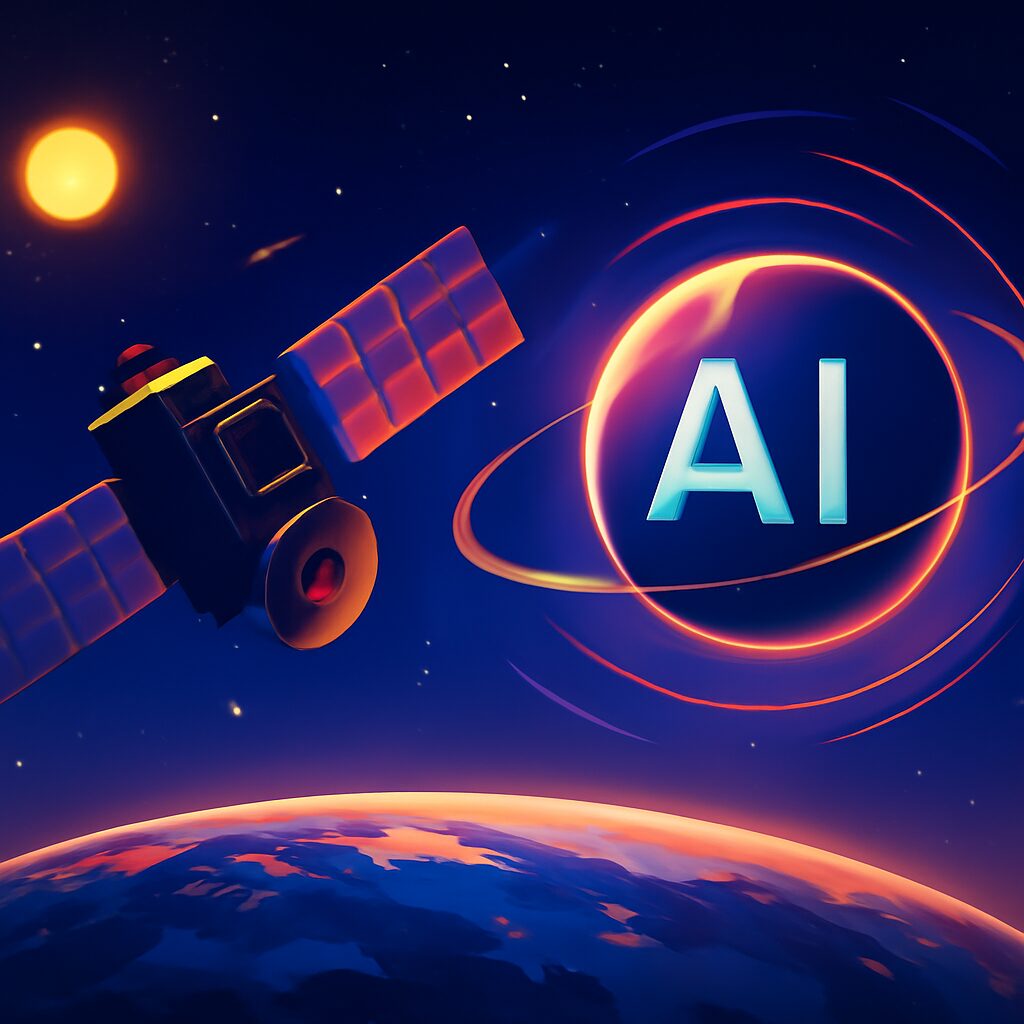
Google has officially launched a satellite into orbit, and this isn’t just any satellite. It’s part of a super ambitious research initiative called Project Suncatcher. Imagine a satellite roughly the size of your fridge, packed not with snacks, but with cutting-edge artificial intelligence hardware. That’s exactly what Google has sent up there!
This cosmic refrigerator is carrying four Tensor Processing Units (TPUs). For those who might not know, TPUs are Google’s custom-built chips specifically designed to accelerate machine learning workloads. They are the muscle behind many of Google’s AI innovations, from search algorithms to advanced image recognition. Sending these powerful processors into the harsh environment of space is a monumental undertaking.
- Project Name: Project Suncatcher
- Satellite Size: Approximately refrigerator-sized
- Core Hardware: Four Tensor Processing Units (TPUs)
- Purpose: To test AI computing in the unique conditions of space
- AI Model Tested: A version of Google’s Gemma AI model
Why Take AI to the Final Frontier?
You might be wondering, why go through all this trouble? Why send valuable, high-tech hardware into the vacuum of space, far from the controlled environments of Earth-bound data centers? The answer lies in pushing the boundaries of what’s possible and understanding how our technology performs under extreme conditions.
Space is a brutal environment. It’s bombarded with radiation, experiences extreme temperature fluctuations, and lacks the atmospheric protection we take for granted. By testing their TPUs and AI models up there, Google aims to gather crucial data on how these chips withstand such stressors. This isn’t just about showing off; it’s about making future AI hardware more robust and reliable for a variety of applications, both on and off our planet.
Furthermore, running AI processing directly in space could open doors to incredible possibilities, like processing vast amounts of satellite imagery in real-time, right where the data is collected, rather than sending it all back down to Earth. This could revolutionize everything from climate monitoring to disaster response.
Gemma AI: The Brain in the Machine
At the heart of this cosmic experiment is a version of Google’s Gemma AI model. Gemma is a family of lightweight, open-source AI models built from the same research and technology used to create Google’s more powerful Gemini models. Running Gemma in space allows Google to evaluate its performance and efficiency in a truly alien setting.
However, running AI in space isn’t without its challenges. Due to the intense heat generated by these powerful TPUs and the difficulty of dissipating that heat in a vacuum, the satellite can only run the Gemma AI model for short bursts – around 15 minutes at a time. This limitation highlights one of the biggest hurdles for long-term, high-performance computing in space, and understanding these thermal dynamics is a key objective of the mission.
What This Means for Us Earth-Bound Gamers?
Okay, so how does a satellite testing AI in space relate to our gaming habits here in Pakistan? While it might not directly impact the next Call of Duty release or your ping in Valorant, this kind of cutting-edge research is foundational to the future of technology that will eventually influence gaming.
Think about the advancements in cloud gaming. If computing becomes more resilient, efficient, and potentially distributed (though space servers are a distant dream!), it could eventually lead to even lower latency and more powerful cloud-based gaming experiences. Moreover, the evolution of AI directly impacts game development – from more realistic and adaptive NPCs (Non-Player Characters) to procedural content generation that creates vast, unique game worlds on the fly. Stronger, more reliable AI hardware, born from tests like Project Suncatcher, could empower developers to create truly next-gen gaming experiences.
This mission also speaks to the continuous push for innovation that benefits all tech sectors. What Google learns about chip resilience and AI performance in space could inform the design of future processors, graphics cards, and even the infrastructure that powers our favorite online games.
Google’s Project Suncatcher is a thrilling reminder that the boundaries of technology are constantly being pushed. While we might not be playing games on orbiting servers just yet, the foundational research happening now in space could very well pave the way for a future where gaming, and indeed all digital experiences, are more immersive, powerful, and seamless than ever before. It’s exciting to watch these giants innovate, knowing that a piece of that progress will eventually trickle down to our gaming rigs and consoles right here in Pakistan.
As an Amazon Associate, PakGamersHub earns from qualifying purchases.