Developer Gets Tomb Raider Running on a Tiny $25 Board Using Just 1 Watt of Power
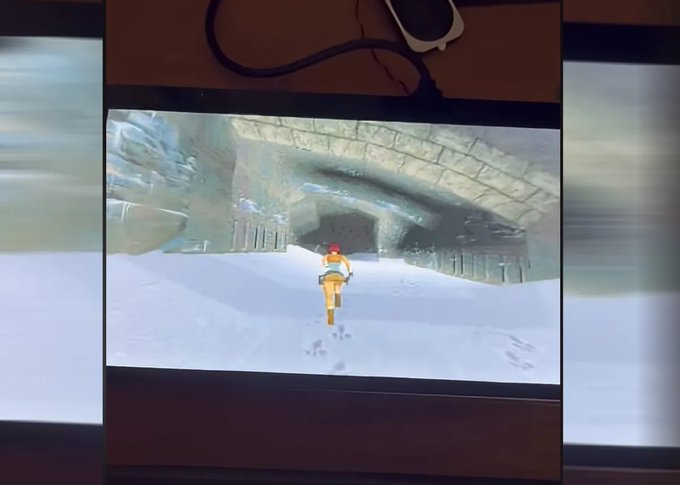
The original Tomb Raider has now been squeezed onto an incredibly tiny and inexpensive piece of hardware.
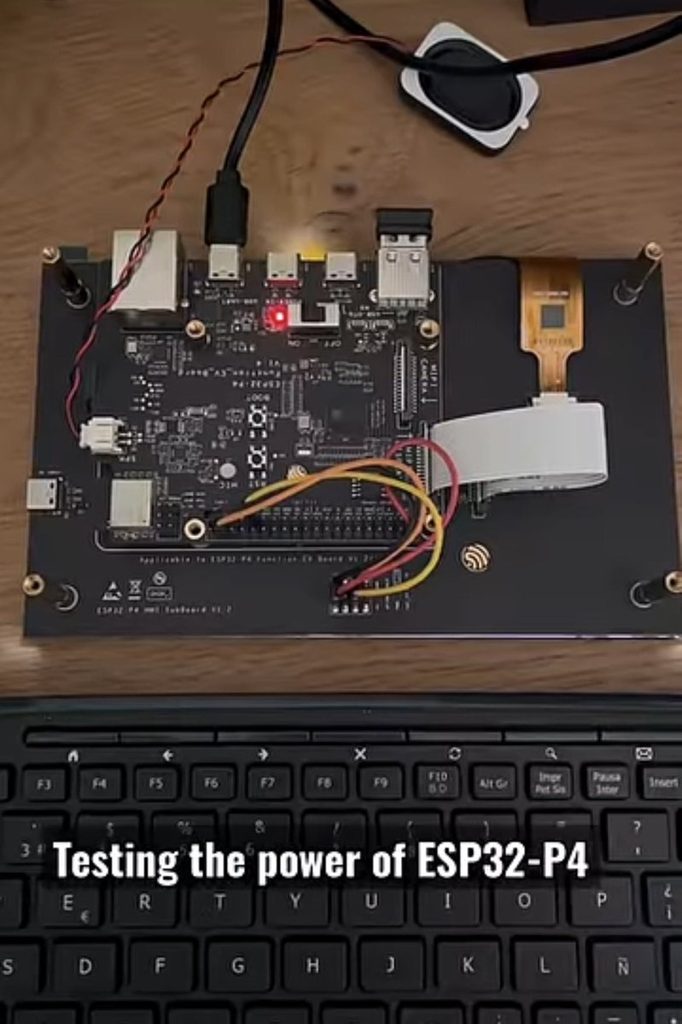
A developer known as TheAlexKid777 has managed to get Tomb Raider running on a roughly $25 ESP32-P4 development board, with the entire setup consuming just around 1 watt of power.
The project uses the ESP32-P4, a dual-core microcontroller capable of running at up to 400 MHz. This is a dramatically different class of hardware compared with a traditional PC, gaming console, or even most modern single-board computers.
Despite those limitations, Tomb Raider is actually playable.
OpenLara Makes It Possible
Rather than emulating the original PlayStation or PC version directly, the project uses OpenLara, an open-source engine designed to recreate the classic Tomb Raider experience on modern and unusual hardware.
The game is rendered internally at 320×240, which is appropriate for hardware with such limited processing power. The resulting image can then be upscaled to 1,024×600 for output to a higher-resolution display.
And this isn’t just a visual tech demo.
The project also supports stereo audio and USB keyboard controls, making it possible to properly play Tomb Raider on a microcontroller consuming around a single watt of power.
Gaming on a 1-Watt Microcontroller
What makes the project particularly impressive is just how little hardware is involved.
Modern gaming systems typically contain processors with billions of transistors, gigabytes of RAM and power requirements measured in tens or hundreds of watts. Here, a dual-core 400 MHz microcontroller is handling a fully 3D game originally designed for PCs and fifth-generation consoles.
Of course, the original Tomb Raider was released in 1996, when hardware limitations forced developers to squeeze impressive results out of comparatively tiny amounts of processing power and memory.
Projects like this demonstrate just how far computing hardware has progressed. A game that once required dedicated gaming hardware can now be made to run on a tiny $25 board drawing approximately as much power as a small LED light.
It’s also another impressive demonstration of what open-source projects such as OpenLara can achieve. Developers aren’t just preserving classic games for modern PCs — they’re getting them running on hardware nobody in 1996 could have imagined using as a gaming machine.
Tomb Raider running at 320×240, with stereo sound and USB controls, on a $25 microcontroller using just one watt of power is exactly the kind of unnecessary engineering experiment we love to see.
As an Amazon Associate, PakGamersHub earns from qualifying purchases.