Activision Patents Groundbreaking AI Voice System: NPCs Could Soon Sound Just Like You!
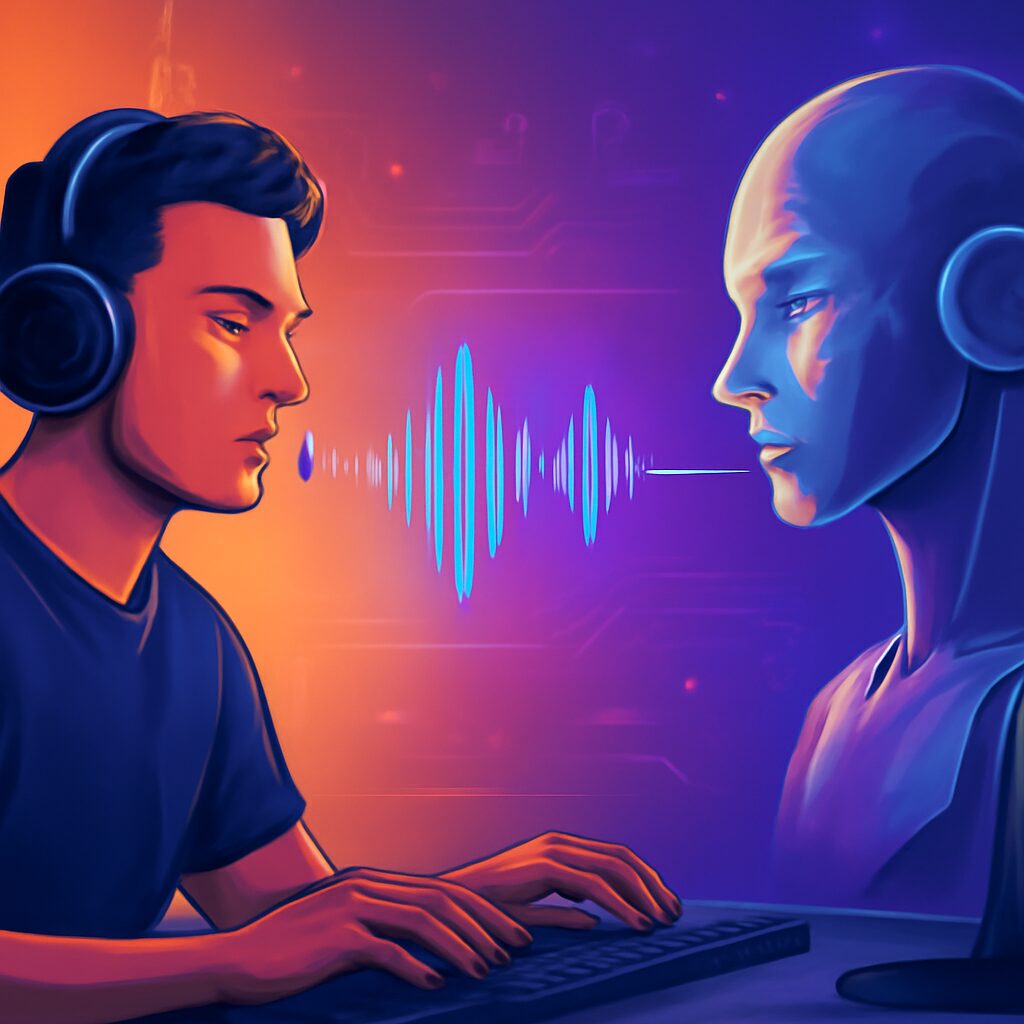
The world of gaming is constantly evolving, with artificial intelligence increasingly playing a pivotal role behind the scenes. From sophisticated enemy behaviors to dynamic world generation, AI is reshaping how we play. Now, a recent patent filing by none other than Activision, the powerhouse publisher behind franchises like Call of Duty, suggests a future where AI takes center stage in one of the most personal aspects of gaming: our voices.
Imagine NPCs not just delivering pre-scripted lines, but speaking in ways that feel uniquely tailored to your own interactions, perhaps even echoing your own speech patterns. That’s the intriguing, and slightly mind-bending, possibility presented by this new technological leap.
The Core Innovation: AI Learns Your Voice
At its heart, this groundbreaking patent describes an AI-driven system designed to revolutionize how non-player characters (NPCs) communicate within games. The core idea is brilliantly simple yet incredibly complex in execution: the AI would actively listen to and learn from real-world player voice chat. Yes, you read that right – your conversations with teammates, your callouts, your reactions, could all become teaching material for the game’s digital inhabitants.
This isn’t just about recording and replaying audio. The patent details a system capable of analyzing various aspects of player speech. Think about the nuances of human communication: tone, cadence, common phrases, even specific vocal inflections. The AI aims to pick up on these intricate details, allowing it to generate new dialogue that doesn’t just sound generic, but potentially resonates with the unique verbal footprint of the players around it.
How It Could Work: From Chat to Character
The patent outlines a sophisticated process. After significant gameplay moments, or perhaps during specific interactions, the AI would process player voice data. This isn’t about simply copying; it’s about understanding and synthesizing. The system would then use this learned data to create new audio content for NPCs. This means a shopkeeper might adopt a friendly, encouraging tone if you often speak positively, or a quest giver might use your preferred slang if the AI detects it as a common part of your vocabulary.
Here are some of the potential applications detailed in the patent:
- Dynamic NPC Dialogue: Imagine NPCs whose speech evolves based on the collective player community’s communication style.
- Personalized Interactions: An NPC could potentially mimic your speech patterns, making conversations feel far more tailored and immersive.
- Voice Recreation for NPCs: The system could generate unique voices for a vast array of NPCs, moving beyond a limited pool of voice actors.
- Player-Mimicking NPCs: Most intriguingly, the patent suggests the AI could even create audio for NPCs that effectively “speak in place of you,” perhaps to fill in for a missing player in a cooperative game or to represent your character’s internal monologue in a unique way.
This technology promises a leap forward in immersion, allowing game worlds to feel more alive and responsive to the human element at the controller.
The Potential Impact on Gaming Immersion
Consider the possibilities. In a massive multiplayer online game, new players might encounter NPCs whose accents or colloquialisms reflect the dominant player base of their region. In a single-player RPG, companion characters might develop speech patterns that echo your own, forging an even deeper connection. The ability for NPCs to communicate in a truly dynamic and personalized manner could break down the artificial barrier between player and game world, leading to unprecedented levels of immersion.
For story-driven games, this could mean more responsive and believable characters. For competitive titles, imagine a game system that could generate unique voice lines for AI teammates that sound like they belong to your regular squad, even when your friends aren’t online. The potential for enhancing realism and player engagement is truly vast, pushing the boundaries of what we expect from in-game dialogue.
Navigating the Ethical Landscape
While the technological promise is immense, such a powerful system also brings forth important considerations, particularly around privacy and data usage. Questions naturally arise: How will player voice data be stored and processed? What are the opt-in/opt-out mechanisms? And what are the ethical implications of an AI mimicking a player’s voice?
Activision, like any major developer exploring advanced AI, would need to navigate these waters carefully, ensuring transparency and prioritizing player trust. The success of such a system would heavily rely on clear communication about how personal data is handled and used to enhance the gaming experience, rather than exploit it.
This patent filing by Activision hints at a future where our in-game interactions could become far more dynamic and personalized than ever before. While it’s still a patent and not a guarantee of immediate implementation, it offers an exciting glimpse into the next frontier of gaming technology, potentially making our virtual companions sound a lot more like us.
As an Amazon Associate, PakGamersHub earns from qualifying purchases.