Epic’s Star Wars & Marvel Shooter Delayed Indefinitely as AI Takes Center Stage
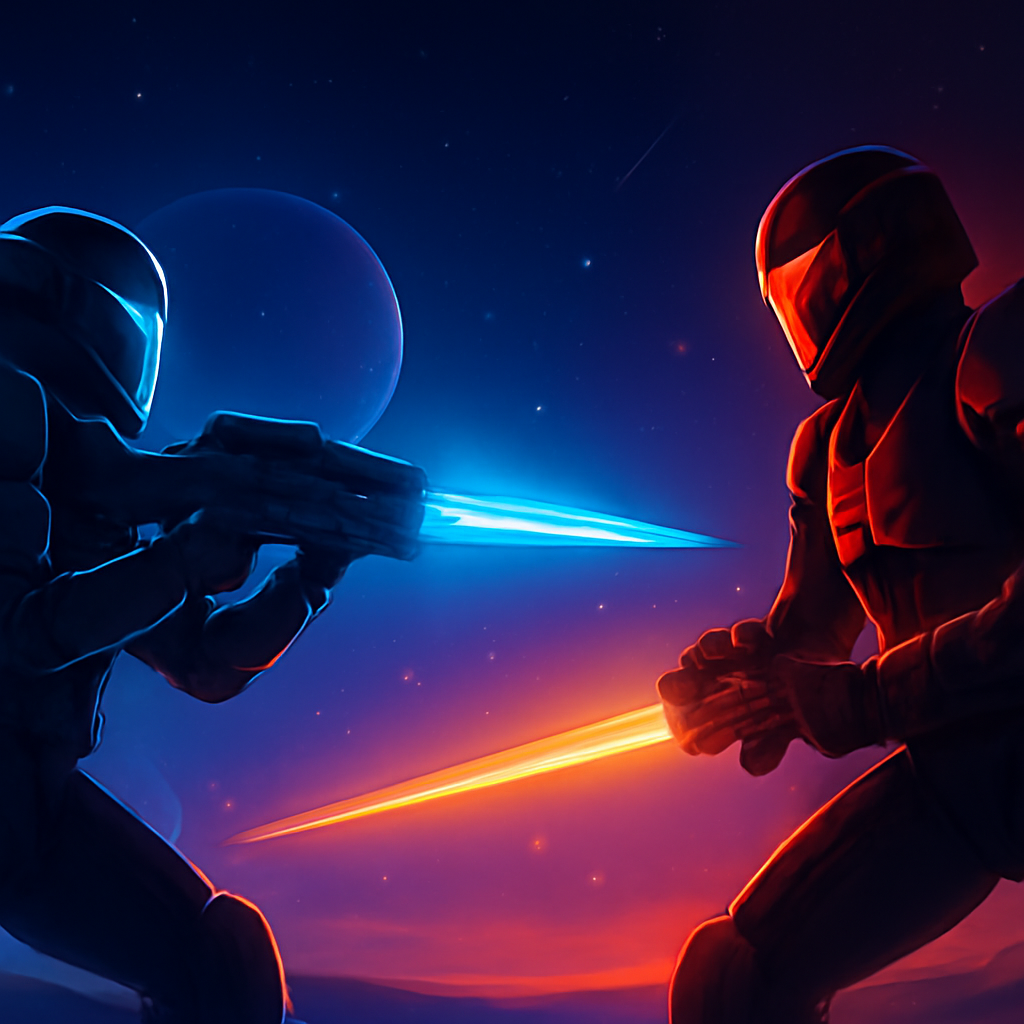
Hold onto your lightsabers and superhero suits, gamers! A highly anticipated, though still officially unannounced, shooter combining the epic universes of Star Wars and Marvel from Epic Games has hit a snag. The project, which has been in the works for a while, has been delayed indefinitely as the studio makes a significant pivot towards an “AI first” development strategy.
This news has sent ripples through the gaming community, sparking discussions about the future of game development and the role artificial intelligence will play. It’s a bold move from a company known for pushing boundaries, and it could redefine how our favorite games are brought to life.
The Force (and AI) Awakens in Development
The Star Wars and Marvel crossover shooter was initially aiming for a release around March 2027, but that timeline is now completely up in the air. Sources suggest that Epic Games has instructed the development teams to fully embrace an “AI first” approach, fundamentally changing how the game is being created from the ground up.
This isn’t just a minor tweak; it’s a comprehensive overhaul. The instructions indicate that the team will be implementing an “AI first” production model, utilizing advanced tools like Anthropic’s Claude. What’s more, a significant portion of the game’s art assets will reportedly be generated using “full AI workflows.” This means that everything from character models to environmental textures could see heavy AI involvement.
Tim Sweeney’s Vision: Beyond the Horizon
Following reports of this major shift, Epic Games CEO Tim Sweeney himself took to social media to share his insights on the company’s direction. He confirmed the massive pivot, stating, “We have a huge pivot underway here at Epic, moving developers around to retool for maximum AI acceleration.”
Sweeney clarified that the goal isn’t to reduce staff or do the same work with fewer people. Instead, he emphasized, “The aim isn’t to do the same stuff with fewer people, but to enable everyone here to build MORE and BETTER stuff, and to bring the benefits to all teams using Unreal.” This suggests a focus on empowering creators and enhancing productivity rather than simply cutting costs.
Addressing the skepticism many gamers have towards generative AI, Sweeney acknowledged that “Much of the room wants it to be 2016 again, but it’s not.” He stressed Epic’s responsibility as a technology provider to design for the present and the future. Personally, he remains optimistic, viewing AI as a powerful tool that will ultimately empower creators.
“Our more modest aim is to survive the AI revolution, help other developers do the same, and come out on the other end making better code and content faster,” Sweeney remarked, highlighting the broader industry implications.
Supercharging Creativity or Cutting Corners?
The potential improvements in development time are a significant factor in Epic’s AI push. Sweeney noted that AI’s impact on efficiency is currently “highly variable,” ranging from a 20% boost in highly technical areas of Unreal Engine development to a whopping 5x improvement in areas like web development. He confidently projected that “By this time next year I expect very little will be less than 3x of January 2026 efficiency.”
This increased efficiency is expected to revolutionize game design itself. Sweeney believes the biggest change will be a much faster transition “from having an idea to playtesting it.” He linked recent AAA game failures to insufficient playtesting during early development, suggesting AI could help mitigate this by allowing developers to iterate and test gameplay mechanics far more rapidly.
It’s worth remembering that this strategic shift comes shortly after Epic Games laid off over 1,000 employees in March, citing various challenges including declining console sales and ongoing legal battles. While Sweeney frames the AI pivot as an enhancement to creation, the timing naturally raises questions about the long-term impact on human roles in game development.
The AI Future: Love It or Leave It?
The integration of AI into such a high-profile project as a Star Wars and Marvel shooter is undeniably a fascinating experiment. Both franchises, much like Epic’s own Fortnite, already possess highly stylized visuals that some argue could blend seamlessly with AI-generated content. This begs the question: will players even notice the difference, or will the aesthetics simply evolve?
Epic’s bold move highlights a growing trend in the tech world: the inevitability of AI adoption. Regardless of consumer sentiment, many industry leaders believe these technologies are here to stay and will fundamentally change how products are made. The gaming industry, always at the forefront of technological innovation, seems poised to be a major battleground for this revolution.
Key aspects of Epic’s “AI first” approach include:
- Indefinite delay for the Star Wars/Marvel shooter.
- Comprehensive integration of AI tools like Anthropic’s Claude.
- Art assets generated through “full AI workflows.”
- Focus on increasing developer efficiency and creativity.
- Aim for 3x efficiency across most development areas by January 2026.
For Pakistani gamers, this news means a potentially faster pipeline for new games, but also a future where the creative process is increasingly intertwined with artificial intelligence. Will these AI-assisted blockbusters deliver even more immersive and polished experiences, or will they lose some of that human touch we’ve come to cherish? Only time, and a galaxy far, far away, will tell.
As an Amazon Associate, PakGamersHub earns from qualifying purchases.