The Human Touch in Digital Worlds: Why Blood of Dawnwalker’s Actor Says AI Won’t Replace Voice Talent Yet
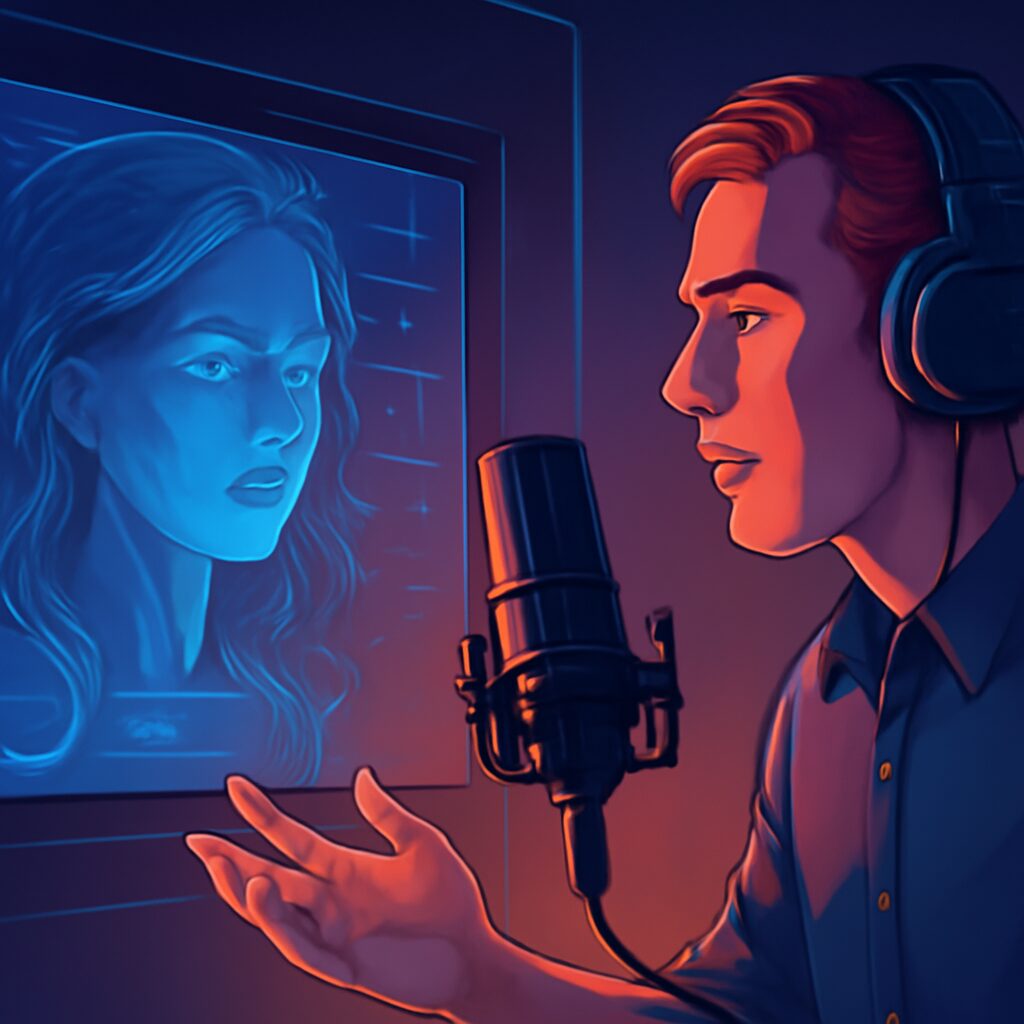
Hey fellow gamers! We often get lost in the stunning graphics, intricate gameplay mechanics, and expansive worlds of our favourite titles, sometimes forgetting the crucial element that truly brings characters to life: their voices. The subtle inflections, emotional depth, and unique personalities conveyed through voice acting are what often make a digital character feel genuinely real and relatable.
Recently, the gaming community has been buzzing about the role of artificial intelligence in various aspects of game development, including voice work. Amidst this discussion, Will de Renzy-Martin, the talented actor who lends his voice to the lead character, Coen, in the English language version of the upcoming title The Blood of Dawnwalker, shared his perspective, reminding us all why the human element in performance remains incredibly valuable and, for now, irreplaceable.
The Unseen Art of Voice Acting
When we talk about a compelling character in a video game, their voice is often the first thing that comes to mind after their visual design. It’s the voice that carries the weight of their emotions, their history, and their aspirations. Will de Renzy-Martin’s insights underline that voice acting is far more than just reading lines from a script. It’s an intricate craft that requires a deep understanding of human psychology, nuanced emotional delivery, and the ability to convey subtext that isn’t explicitly written.
Imagine a pivotal moment in a game where a character delivers a heartbreaking monologue or a triumphant battle cry. The power of that scene hinges on the actor’s ability to infuse every word with genuine feeling. This isn’t something that can be easily replicated by algorithms, no matter how advanced. A human actor brings their own life experiences, their interpretations, and their unique vocal signature to the role, creating a performance that resonates deeply with players.
- Emotional Depth: Conveying genuine sadness, anger, joy, or fear with subtle vocal changes.
- Contextual Understanding: Interpreting the character’s motivations and the scene’s intent beyond literal words.
- Improvisation & Adaptation: Reacting organically to direction or even fellow actors’ performances.
- Vocal Nuance: Mastering breath control, pacing, and inflections to create unique and memorable delivery.
- Consistency in Arc: Maintaining character integrity across hours of dialogue, adapting to their evolving journey.
AI’s Current Limitations: A Digital Chasm
While AI technology has made astonishing strides in generating realistic-sounding voices, often indistinguishable from human speech in basic contexts, the challenge lies in replicating the complexity of a truly expressive performance. AI can mimic tone, pitch, and even mimic various accents with impressive accuracy. However, where it often falls short is in capturing the soul, the genuine emotion, and the subtle, almost imperceptible nuances that make a voice truly human.
A machine can produce words, but it struggles to understand the emotional weight behind them. It can’t spontaneously infuse a line with a hint of sarcasm, a flicker of doubt, or a surge of hope in the same organic way a human actor can. This often leads to what gamers might describe as an “uncanny valley” effect in voice acting – where the voice sounds almost human, but something feels off, creating a disconnect rather than immersion. This lack of authentic emotional intelligence is currently the biggest hurdle for AI in high-stakes narrative gaming.
More Than Just Words: The Player’s Connection
For us gamers, the quality of voice acting isn’t just a technical detail; it’s fundamental to our experience. A compelling voice performance can elevate a good game to a great one, forging an unbreakable bond between the player and the on-screen character. Think about the iconic voices that have shaped our gaming memories – they’re not just speaking lines, they are embodying personalities that stick with us long after the credits roll.
A flat, robotic, or emotionally inconsistent voice performance, especially for a main character, can pull players right out of the immersive world the developers worked so hard to create. It breaks the illusion, diminishing the emotional impact of crucial story beats and making it harder to invest in the character’s journey. The human element ensures that the laughter feels genuine, the tears sound real, and the anger resonates with conviction, making the entire gaming experience richer and more memorable.
The Road Ahead: Coexistence, Not Replacement?
So, does this mean AI has no place in the future of gaming voice acting? Not necessarily. AI can serve as an incredibly powerful tool for game developers. It could be used for generating background chatter for non-essential NPCs, creating placeholder dialogue during early development, or even for accessibility features like text-to-speech for visually impaired players. These applications leverage AI’s strengths without demanding it to deliver complex emotional performances.
However, for the lead roles, the emotional anchors of a game’s narrative, and characters that players will spend dozens, even hundreds of hours interacting with, the human touch remains paramount. The consensus within the industry, echoed by actors like Will de Renzy-Martin, suggests a future where AI assists and enhances the creative process, rather than completely replacing the irreplaceable human artistry that brings true depth and soul to our beloved digital worlds.
For gamers across Pakistan, who appreciate the rich storytelling and immersive experiences our favourite titles offer, this conversation highlights the enduring value of the human element in our digital entertainment. It’s a powerful reminder that while technology continues to push boundaries, the raw, emotional power of a human performance will likely remain a cornerstone of truly unforgettable gaming experiences.
As an Amazon Associate, PakGamersHub earns from qualifying purchases.